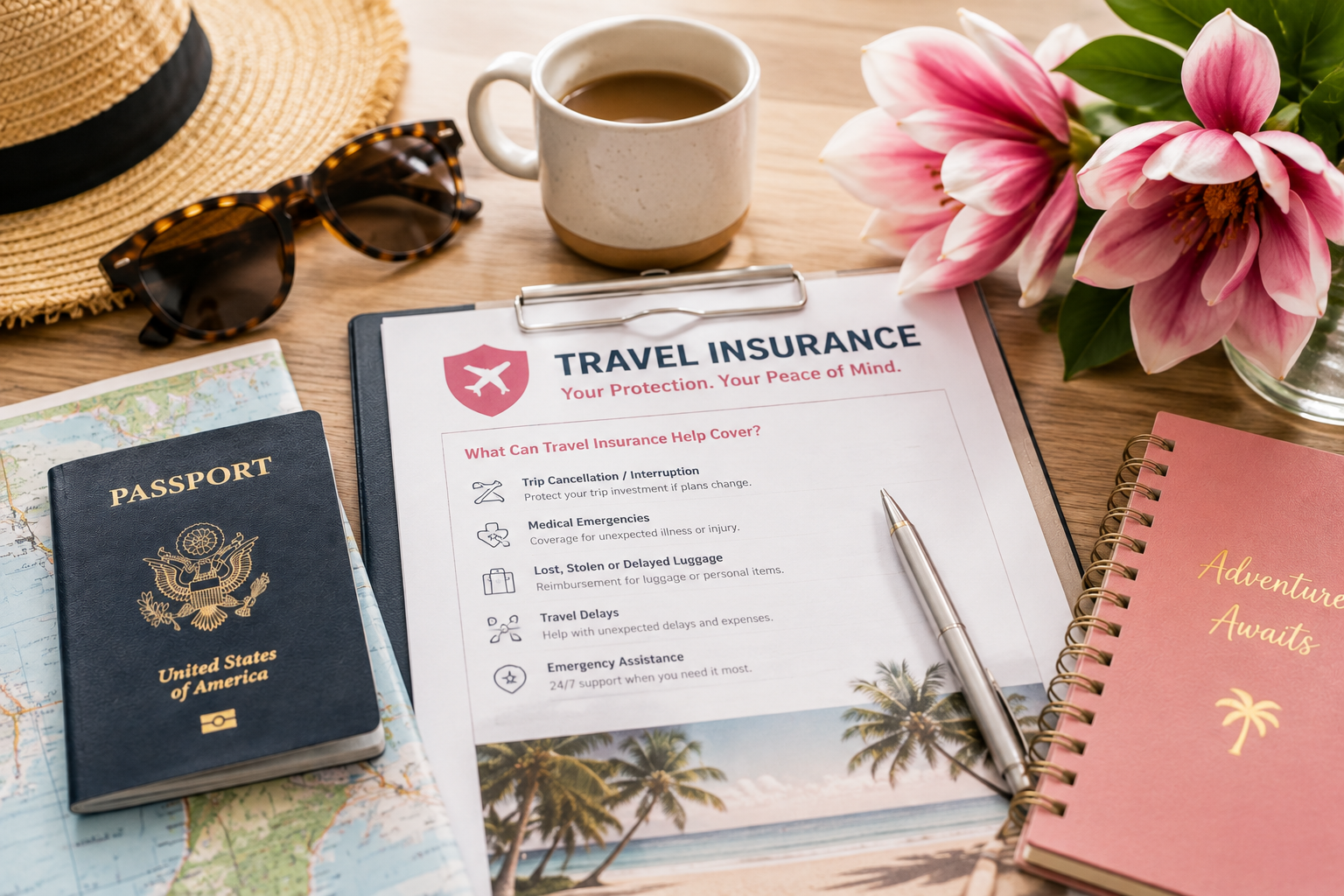
Before You Travel
Passport & Travel Documents
Everything you need to know before your Caribbean vacation or cruise.
Whether you are sailing through the Caribbean or relaxing at an all-inclusive resort, making sure your travel documents are ready is one of the most important parts of preparing for your trip.
This guide will help you understand the basics of passport books, passport cards, expiration dates, identification, document organization, and the questions you should review before departure.
Travel-document requirements can vary by citizenship, destination, itinerary, transportation method, and personal circumstances. Always confirm the current requirements for your specific trip.

Check Early
Review passport expiration dates and document needs well before your departure date.
Confirm Requirements
Requirements may differ based on your destination, cruise itinerary, citizenship, and method of travel.
Stay Organized
Keep identification, confirmations, insurance information, and backup copies in a secure and accessible place.
Start with Your Itinerary
Do You Need a Passport?
The answer depends on your citizenship, destination, itinerary, departure port, and whether you are traveling by air, land, or sea.
There Is No Single Rule for Every Caribbean Vacation
A traveler flying internationally will generally need a valid passport book. Certain cruises that begin and end at the same United States port may permit qualifying U.S. citizens to travel with other approved citizenship and identification documents. However, destination, cruise-line, age, and itinerary requirements can vary.
International Air Travel
Flying to the Caribbean
U.S. citizens returning to the United States by air generally need a valid U.S. passport book. A passport card is not a substitute for a passport book when traveling internationally by air.
Important: Review the destination’s passport validity, blank-page, visa, and entry-form requirements before departure.
Closed-Loop Cruising
Beginning and Ending at the Same U.S. Port
Some qualifying U.S. citizens on closed-loop cruises may be able to travel using proof of citizenship and government-issued photo identification instead of a passport book.
Important: The cruise line and every destination on the itinerary may have additional document requirements.
Other Cruise Itineraries
One-Way or International Departures
Cruises that begin and end in different ports, depart outside the United States, or require international flights will commonly require a valid passport book and may involve additional entry requirements.
Important: Confirm the documentation for the full itinerary, including pre-cruise and post-cruise travel.
What Is a Closed-Loop Cruise?
It is generally a cruise that departs from and returns to the same United States port.
Permitted Does Not Always Mean Recommended
Although some travelers may qualify to sail without a passport book, that documentation may not allow them to fly internationally.
If an illness, emergency, missed sailing, or another unexpected event requires you to leave the ship and fly home from another country, traveling without a valid passport book may create significant complications.
Confirm These Details Before You Travel
Do not rely on a general rule or another traveler’s experience. Review the requirements that apply to your exact vacation.
- Your citizenship and age
- Every destination and port on the itinerary
- Whether you are traveling by air, land, or sea
- The cruise line or travel supplier’s requirements
- Your passport’s expiration date and validity
- Required entry forms, visas, or authorizations
This guide provides general information for U.S. travelers and is not a substitute for official government guidance. Travelers are responsible for confirming and carrying the documents required for their citizenship, destination, itinerary, and method of travel.
Understand the Difference
Passport Book vs. Passport Card
Both documents prove U.S. citizenship and identity, but they are not interchangeable for every type of international travel.
Full International Travel Document
Passport Book
A passport book is the traditional passport most travelers recognize. It provides the greatest flexibility for international vacations and can be used for eligible travel by air, land, and sea.
Common uses include:
- International air travel
- Caribbean resort vacations
- Cruises and international ports
- International land-border crossings
- Visas and entry stamps when required
- Unexpected international flights home
Why Travelers Often Choose It
It is the more versatile option and provides greater flexibility when an itinerary includes flights, cruises, multiple countries, or an unexpected need to return home by air.
Limited Land and Sea Document
Passport Card
A passport card is a wallet-sized travel document. It can be useful for qualifying land and sea travel, but its international uses are much more limited than those of a passport book.
Common uses include:
- Land travel between the United States and Canada
- Land travel between the United States and Mexico
- Qualifying sea travel to Canada or Mexico
- Qualifying sea travel to Bermuda
- Qualifying sea travel to certain Caribbean destinations
- Not valid for international air travel
Important Limitation
A passport card cannot be used to board an international flight. This includes an unexpected flight home from a Caribbean destination during a cruise or vacation.
Compare Them at a Glance
Use this overview to understand the basic difference, then confirm the requirements for your specific itinerary before traveling.
| Type of Travel | Passport Book | Passport Card |
|---|---|---|
| International air travel | Valid | Not valid |
| International sea travel | Valid | Limited |
| International land travel | Valid | Limited |
| Caribbean resort reached by air | Valid | Not valid |
| Unexpected international flight home | Valid | Not valid |
Which One Is Better for a Caribbean Vacation?
For most travelers planning a Caribbean resort vacation or cruise, a passport book is generally the more practical long-term choice because it can be used for international air travel and offers greater flexibility if plans change unexpectedly.
This guide provides general information for U.S. travelers. Passport use and entry requirements may vary by destination, itinerary, citizenship, cruise line, and method of travel. Confirm the current requirements for your specific trip through official government and travel-supplier sources.
Check the Date Early
Passport Expiration & Validity
Your passport may not be considered travel-ready simply because it remains valid through the dates printed on your itinerary.
Your Return Date Is Not Always the Only Date That Matters
Some destinations require a passport to remain valid for a specific period after arrival or after the planned departure date. Others may require blank passport pages, visas, electronic authorizations, or additional travel documents.
Remaining Validity
Check Beyond Your Travel Dates
A destination may require your passport to remain valid beyond the day you plan to return home. The exact period varies, so do not assume one general rule applies everywhere.
Review: The validity requirement for every country included in your itinerary.
Passport Condition
Pages and Physical Condition Matter
Some destinations require one or more blank passport pages. A passport that is damaged, altered, or excessively worn may also create problems during check-in or entry screening.
Review: Blank-page requirements and the physical condition of the passport.
Complete Itinerary
Check Every Destination
A cruise, connecting flight, or multi-island vacation may involve several countries. Your passport must meet the requirements for the complete itinerary—not only the destination where you spend the most time.
Review: Connections, ports, overnight stays, and pre- or post-cruise travel.
Look Beyond the Expiration Date
Validity, condition, blank pages, visas, authorizations, and traveler information may all affect whether a passport is ready for use.
Review These Details on Every Passport
Check each traveler’s document individually. Family members may have different expiration dates, eligibility requirements, or passport needs.
- The exact expiration date
- Required remaining validity
- Correct full legal name
- Accurate date of birth
- Available blank pages
- Passport damage or wear
- Required visa or authorization
- Supplier or cruise-line document rules
A Simple Passport Review Process
Checking early gives you time to understand the requirements and address a renewal, correction, or replacement before departure.
Check the Passport
Review the expiration date, traveler information, condition, and available blank pages as soon as you begin planning.
Check the Itinerary
Identify every destination, port, connection, departure point, and country involved in your complete trip.
Check Official Requirements
Review current government and travel-supplier information, then begin any necessary renewal or correction process promptly.
Verify the Current Requirements
Passport and destination requirements can change. Use official government sources to confirm the rules for your exact itinerary before traveling.
This guide provides general information for U.S. travelers and is not a substitute for current government guidance. Travelers are responsible for confirming and carrying the documents required for their citizenship, destination, itinerary, and method of travel.
Getting Started
Applying for Your First Passport
The application process becomes easier when you gather the required information early and complete each step carefully.
First-Time Adult Applicants Generally Apply in Person
Adults applying for their first U.S. passport generally complete Form DS-11 and submit the application in person at an authorized passport acceptance facility. Do not sign the form until instructed to do so by the acceptance agent.
Begin with the Form
Complete the Correct Application
Review the eligibility instructions and complete the current first-time passport application form using accurate information that matches your supporting documents.
Remember: Follow the official signing instructions for an in-person application.
Citizenship Evidence
Gather Proof of Citizenship
Prepare an original or certified form of acceptable citizenship evidence and any required photocopies according to the current application instructions.
Important: A standard photocopy is not a replacement for an original or certified document when one is required.
Identity
Prepare Photo Identification
Bring an acceptable photo identification document and the required photocopy. Make sure the name and personal information are consistent across your application and supporting records.
Check: Current photocopy and identification requirements before your appointment.
Passport Photo
Obtain a Compliant Photo
Use a recent color photograph that meets the current size, background, positioning, expression, quality, and appearance requirements.
Avoid delays: Review official examples before submitting your photo.
Submit in Person
Locate an Acceptance Facility
Find an authorized passport acceptance facility, review whether an appointment is required, and bring your completed application, documents, photograph, identification, and payment.
Examples: Some post offices, clerks of court, libraries, and local government offices accept applications.
Fees and Processing
Review Costs and Timing
Confirm the current application, execution, optional service, and delivery fees. Review current processing estimates and include mailing time when planning.
Plan ahead: Processing estimates and available services can change.
Prepare Before Your Appointment
Arriving with the correct originals, photocopies, photo, form, and payment can help prevent avoidable delays.
Your Application Materials May Include
Exact requirements depend on your situation. Review the official checklist before your appointment rather than relying only on a general summary.
- Completed application form
- Acceptable citizenship evidence
- Acceptable photo identification
- Required photocopies
- One compliant passport photo
- Correct application fees
- Name-change records when applicable
- Facility appointment details when required
Passport Photos Have Specific Requirements
The photo must follow current government standards for size, background, head position, expression, lighting, print quality, and recent appearance. A photo that does not meet the requirements may delay the application.
Give Yourself More Time Than You Think You Need
Processing time is only one part of the timeline. You may also need time to gather records, schedule an appointment, correct an issue, mail the application, and receive the completed passport.
Check Early
Begin reviewing passport needs as soon as international travel becomes a possibility.
Include Mailing Time
Published processing estimates may not include every mailing or delivery period.
Verify Before Booking
Make sure you understand whether you can obtain the required documents in time for your planned trip.
Use the Current Official Application Instructions
Passport forms, fees, photo standards, processing estimates, and application procedures may change. Review the current instructions before completing or submitting your application.
This guide provides general information for U.S. travelers and is not a substitute for current government instructions. Applicants are responsible for completing the correct form and submitting all required documents, identification, photographs, photocopies, and fees.
Before Your Passport Expires
Renewing Your Passport
Review your eligibility, choose the correct renewal method, and allow enough time for processing and delivery before your trip.
Not Every Existing Passport Can Be Renewed the Same Way
Some adults may qualify to renew online or by mail, while others must submit a new application in person. Eligibility depends on factors such as when the passport was issued, the applicant’s age when it was issued, the passport’s condition, and whether it is available to submit or verify.
Eligible Applicants
Renew Online
Eligible U.S. citizens may be able to complete a routine passport renewal through the official Department of State online renewal system.
Important: Use only the official government renewal website and review every eligibility requirement before beginning.
Eligible Applicants
Renew by Mail
Travelers who meet the mail-renewal requirements may submit the appropriate renewal form, their most recent qualifying passport, a compliant photograph, applicable fees, and any required supporting records.
Check carefully: Mailing addresses, forms, payment instructions, and supporting-document requirements may vary.
When Renewal Is Not Available
Apply in Person
If your passport does not qualify for renewal, you may need to complete a new application and submit it in person at an authorized passport acceptance facility.
Examples: This may apply when a passport was lost, stolen, damaged, issued too long ago, or issued before age 16.
Check Your Eligibility First
Do not select a form or renewal method until you have reviewed the current official requirements.
Questions That May Affect Renewal Eligibility
These questions provide a starting point. The official eligibility checklist determines which application method and form you should use.
- Was the passport issued when you were age 16 or older?
- Was it issued within the eligible renewal period?
- Is the passport undamaged?
- Is it available to submit or verify?
- Does it reflect your current legal name?
- Can you provide the required name-change record?
- Are you eligible for the requested service type?
- Do you have enough time for processing and delivery?
You May Need a New Application Instead of a Renewal
If your previous passport was issued more than 15 years ago, issued when you were under age 16, lost, stolen, or significantly damaged, you may not qualify for the standard adult renewal process. Review the current instructions for applying in person before selecting your form.
A Simple Renewal Preparation Process
Begin before your passport becomes an urgent problem. Reviewing the document and your travel plans early gives you time to choose the correct process.
Review Your Passport
Check the issue date, expiration date, condition, name, and age when the passport was issued.
Confirm Your Method
Determine whether you qualify to renew online, renew by mail, or must submit a new application in person.
Gather and Submit
Follow the current instructions for forms, photographs, fees, supporting records, mailing, or online submission.
Use Only Official Renewal Instructions
Renewal eligibility, forms, fees, processing times, and online services may change. Confirm the current instructions directly with the U.S. Department of State before submitting an application.
This guide provides general information for U.S. travelers and is not a substitute for current government instructions. Applicants are responsible for determining their eligibility, selecting the correct application method, and submitting all required forms, documents, photographs, and fees.
Preparing Younger Travelers
Children’s Passports
Children and teenagers have different passport application, appearance, consent, and validity requirements than adult travelers.
Review Every Child’s Passport Separately
Do not assume that every member of the family follows the same process or has the same passport-validity period. The steps change based on whether the applicant is under age 16 or is age 16–17.
Younger Applicants
Children Under Age 16
A child under age 16 must apply for a new passport in person. The child must appear as part of the application process, and parents or guardians must provide the required consent and relationship documentation.
Important differences include:
- The child applies in person
- The child’s presence is required
- Parental or guardian consent is required
- Proof of the parental relationship is required
- The passport is valid for five years
- The passport cannot be renewed
Plan Ahead
Because a child’s passport has a shorter validity period, check the expiration date before every international vacation.
Teen Applicants
Applicants Ages 16–17
Applicants ages 16–17 also apply using a youth-specific process. They generally appear in person and must show that at least one parent or legal guardian is aware of the application.
Important considerations include:
- The applicant generally applies in person
- Citizenship evidence is required
- Identification requirements apply
- Parental awareness must be demonstrated
- A compliant passport photo is required
- Current forms and fees must be reviewed
Important Transition
The process for a 16- or 17-year-old is not identical to the process for a child under age 16 or a renewing adult.
Prepare the Family’s Documents
The child’s documents and the parents’ or guardians’ records may both be needed during the application.
An Application for a Child Under 16 May Include
Exact requirements depend on the family’s circumstances. Review the official checklist before scheduling the appointment.
- The correct passport application
- The child’s citizenship evidence
- Required photocopies
- Evidence of the parental relationship
- Parent or guardian photo identification
- The required parental consent
- One compliant passport photo
- Current application and execution fees
A Passport Issued Before Age 16 Cannot Be Renewed
When a child’s passport expires, the family must complete a new passport application rather than using the standard adult renewal process. Begin reviewing the new-application requirements well before the next international trip.
A Simple Family Passport Review
Review every traveler’s document at the beginning of the planning process, even when the family has traveled internationally before.
Check Every Age
Identify which travelers are under 16, ages 16–17, or adults so the correct application process can be reviewed.
Check Every Date
Review each passport’s expiration date and the validity requirements for the family’s complete itinerary.
Gather Consent Early
Determine who must appear and which relationship, custody, identification, or consent records will be required.
Review the Instructions for Your Child’s Exact Age
Application forms, consent procedures, fees, identification requirements, and supporting documents may change. Use the current government instructions before applying.
This guide provides general information for U.S. travelers and is not a substitute for current government instructions or legal guidance. Parents and guardians are responsible for selecting the correct application process and submitting all required consent, custody, identification, citizenship, relationship, photograph, and fee documentation.
Protect What You Need to Travel
Keeping Your Travel Documents Safe
Organizing and protecting your passport, identification, confirmations, and emergency information can make an unexpected situation much easier to manage.
Create a Backup Plan Before You Leave Home
A lost passport or missing confirmation can be stressful, but secure copies, organized information, and a clear plan can help you respond more quickly if something goes wrong.
While Traveling
Store Originals Securely
Keep passports and other essential documents in a secure location when they are not needed. Avoid placing them in an exposed outer pocket, unattended bag, or easily accessible compartment.
Consider: What you need to carry for the day and what can remain secured at the hotel, resort, or ship.
Backup Copies
Create Secure Digital Copies
Store secure copies of passports, identification, insurance information, confirmations, emergency contacts, and important account details in a location you can access while traveling.
Protect them: Use secure storage rather than leaving sensitive images openly available on a shared device.
If Something Is Lost
Know Who to Contact
If a passport is lost or stolen, follow the current reporting instructions and contact the nearest U.S. embassy or consulate when abroad. Local authorities may also need to be contacted depending on the circumstances.
Keep handy: Embassy information, emergency contacts, insurance details, and a copy of the missing passport.
Before You Leave Home
A few simple preparation steps can make your documents easier to access, protect, and replace if needed.
Complete These Document-Safety Steps
Create more than one way to access important information without carrying every original and copy in the same place.
- Make a secure digital passport copy
- Pack one separate paper passport copy
- Leave trip details with a trusted contact
- Save important confirmation numbers
- Record your insurer’s emergency contact
- Save embassy or consulate contact details
- Separate originals from backup copies
- Review how to report a lost passport
Build a Simple Travel Document Folder
Keep the information you may need during the trip together, while storing sensitive originals and copies securely.
Travel-Day Essentials
- Passport or required identification
- Boarding passes
- Cruise or resort documents
- Flight and transportation details
- Travel-insurance information
- Emergency contacts
Secure Backup Copies
- Passport information page
- Driver’s license or photo identification
- Insurance policy details
- Full itinerary
- Important account contact numbers
- Embassy or consulate details
If Your Passport Is Lost or Stolen Abroad
Report the passport using the current official process and contact the nearest U.S. embassy or consulate for assistance. Follow their instructions for documenting the loss and applying for a replacement or emergency passport. A secure copy of the passport and your travel itinerary may help during the process.
Save the Official Help Resources Before You Travel
Reporting and replacement procedures may change. Review the current government guidance and save the contact information you may need before leaving the United States.
This guide provides general information for U.S. travelers and does not replace current government, law-enforcement, embassy, consulate, insurer, or travel-supplier instructions. Travelers are responsible for securing their documents and following the correct reporting and replacement procedures.
Common Travel Document Questions
Passport Frequently Asked Questions
Find answers to common questions about expiration dates, passport copies, name differences, cruise documents, safety, and preparing for international travel.
How early should I check my passport?
Check every traveler’s passport as soon as international travel becomes a possibility—ideally before confirming a trip that requires one.
Reviewing it early gives you more time to address expiration, damage, name differences, missing pages, renewal eligibility, or another issue before departure.
Can I travel if my passport expires shortly after my trip?
That depends on the requirements of every destination included in your itinerary. Some destinations require additional passport validity beyond the planned travel dates.
Review the requirements for your destinations, connections, cruise ports, airline, and travel supplier rather than relying only on the printed expiration date.
Do I need a passport for a closed-loop cruise?
Some qualifying U.S. citizens on certain cruises that begin and end at the same U.S. port may be permitted to travel with other approved citizenship and identification documents.
However, requirements can vary by itinerary, destination, age, citizenship, and cruise line. A valid passport book also provides greater flexibility if an unexpected situation requires you to fly home internationally.
Can I use a passport card instead of a passport book?
A passport card has limited uses for qualifying land and sea travel. It cannot be used for international air travel.
For most Caribbean resort vacations reached by air—and for travelers who want greater flexibility—a passport book is generally the more practical choice.
Does the name on my reservation need to match my passport?
The traveler’s name should be entered carefully and consistently according to the identification or passport being used for the trip.
Review all names immediately after booking. Correcting a mismatch later may involve supplier rules, documentation, fees, or restrictions.
Can I take my own passport photo?
A self-taken photo may be accepted only when it meets every current passport-photo requirement for size, background, lighting, expression, position, image quality, and recent appearance.
Review the official photo examples carefully. A noncompliant photo can delay the application.
Can a child’s passport be renewed?
A passport issued before age 16 cannot use the standard adult renewal process. A new application must be completed using the current requirements for the child’s age.
Review appearance, parental-consent, relationship, identification, photograph, and document requirements well before the family’s next international trip.
Should I make copies of my passport?
Secure digital and paper copies of the passport information page can be useful if the original is lost or stolen.
Store copies separately from the original, protect sensitive information, and remember that a copy does not replace the original passport for travel.
Should I carry my passport everywhere during my vacation?
That depends on local requirements, your activity, transportation, destination, and whether the original document is needed that day.
When the original is not required, many travelers prefer to keep it secured and carry another appropriate form of identification or a copy when practical. Confirm the requirements for your specific destination and activity.
What should I do if my passport is lost or stolen abroad?
Follow the current reporting process and contact the nearest U.S. embassy or consulate for instructions. Local authorities may also need to be contacted depending on the circumstances.
Secure copies of your passport, itinerary, identification, insurance information, and emergency contacts may help during the replacement process.
How do I know whether to renew or apply in person?
Renewal eligibility depends on factors such as the passport’s issue date, your age when it was issued, its condition, whether it is available, and whether your current legal name can be properly documented.
Use the official eligibility instructions to determine whether you can renew online, renew by mail, or need to submit a new application in person.
Who is responsible for confirming travel-document requirements?
Every traveler is responsible for obtaining and carrying the documents required for their citizenship, age, destination, itinerary, method of travel, and personal circumstances.
Your travel advisor can remind you to review documentation, but final requirements should be confirmed through current official government and travel-supplier sources.
Confirm the Requirements for Your Exact Trip
Another traveler’s experience may not apply to your vacation. Citizenship, age, destination, cruise itinerary, departure port, connections, supplier rules, and method of travel can all affect which documents are required.
Still Unsure About a Passport Requirement?
Use the current U.S. Department of State information and the official requirements for every destination and travel supplier included in your itinerary.
This guide provides general information for U.S. travelers and is not a substitute for current government, legal, immigration, embassy, consulate, cruise-line, airline, or destination guidance. Travelers are responsible for confirming and carrying the required documents.
Prepare Before Departure
Printable Travel Document Checklist
Use this checklist to organize the identification, confirmations, emergency information, and backup copies you may need before your Caribbean vacation or cruise.
Pink Magnolia Travels
Travel Document Checklist
Review the requirements for your exact citizenship, destination, itinerary, age, airline, cruise line, and method of travel.
Passport & Identification
- Passport book or required travel document
- Government-issued photo identification
- Passport expiration date reviewed
- Remaining-validity requirement confirmed
- Traveler name matches reservations
- Passport condition and blank pages checked
- Child or teen passport requirements reviewed
Destination Requirements
- Entry requirements reviewed
- Visa requirements confirmed
- Electronic travel authorization completed
- Required entry or customs forms completed
- Cruise-port requirements reviewed
- Flight-connection requirements reviewed
- Current travel advisories checked
Transportation
- Airline confirmation
- Boarding passes or mobile access
- Checked- and carry-on baggage limits
- Airport transportation confirmation
- Resort or cruise-port transfer details
- Pre-cruise hotel confirmation
- Return transportation details
Vacation Confirmations
- Resort or hotel confirmation
- Cruise booking documents
- Cruise check-in completed
- Cabin or room details
- Dining reservations
- Shore excursions or activity confirmations
- Special-request confirmations
Insurance & Health
- Travel-insurance policy information
- Insurance emergency-assistance number
- Health-insurance information
- Prescription medications packed
- Medication documentation when needed
- Allergy or medical information recorded
- Destination health guidance reviewed
Secure Backup Copies
- Secure digital passport copy
- Separate paper passport copy
- Copy of photo identification
- Copy of insurance policy information
- Complete itinerary backed up
- Trusted contact has itinerary
- Embassy or consulate details saved
Emergency Contact Information
Additional Notes
This checklist is intended for general organization and does not replace current government, destination, airline, cruise-line, resort, insurance, legal, immigration, health, or consular guidance.
Personalized Travel Planning
Travel Planning Should Feel Exciting—Not Overwhelming
Your passport is only one part of preparing for an international vacation. Personalized planning helps bring the complete experience together.
You Do Not Have to Figure Out Every Detail Alone
From choosing where to go to organizing the moving pieces of your vacation, thoughtful guidance can make planning feel clearer and more manageable.
How Pink Magnolia Travels Supports You
Personalized Planning for Your Caribbean Vacation or Cruise
I help couples plan Caribbean vacations and cruises based on the experience they want to share—not simply the first resort, ship, or package that appears in a search.
Together, we will consider your travel style, budget, dates, departure options, preferred pace, accommodations, activities, and the balance of adventure and relaxation that feels right for you.
Your planning experience may include:
- Personalized destination recommendations
- Resort, ship, and itinerary comparisons
- Room or cabin category guidance
- Flight, hotel, and transfer planning
- Excursion and experience ideas
- Important deadline and preparation reminders
- Travel-protection options to review
- Support before, during, and after your vacation
What I Can—and Cannot—Do With Travel Documents
I can remind you to review passport and entry requirements, help you identify the destinations and suppliers involved in your itinerary, and direct you to official information. However, each traveler remains responsible for confirming, obtaining, and carrying the documents required for their specific trip.
Your Vacation Begins with a Simple Conversation
You do not need to know the exact island, resort, cruise line, or itinerary before reaching out. We can begin with what you want the vacation to feel like.
Share Your Vision
Tell me about your dates, budget, interests, travel style, and the kind of experience you want to share together.
Explore the Possibilities
I will help you compare the destinations, resorts, cruises, and experiences that best match your priorities.
Travel with Confidence
Once your vacation is selected, I will help organize the planning details and keep you informed as departure approaches.
Your Perfect Escape starts with a simple conversation.
Ready to Begin Planning Your Vacation?
Tell me what you are imagining, even if the idea is still as simple as “we need a beach,” “we want to take a cruise,” or “we are finally ready for a vacation.”
You do not need to have every detail figured out before reaching out. Your inquiry gives us a starting point for the conversation.