
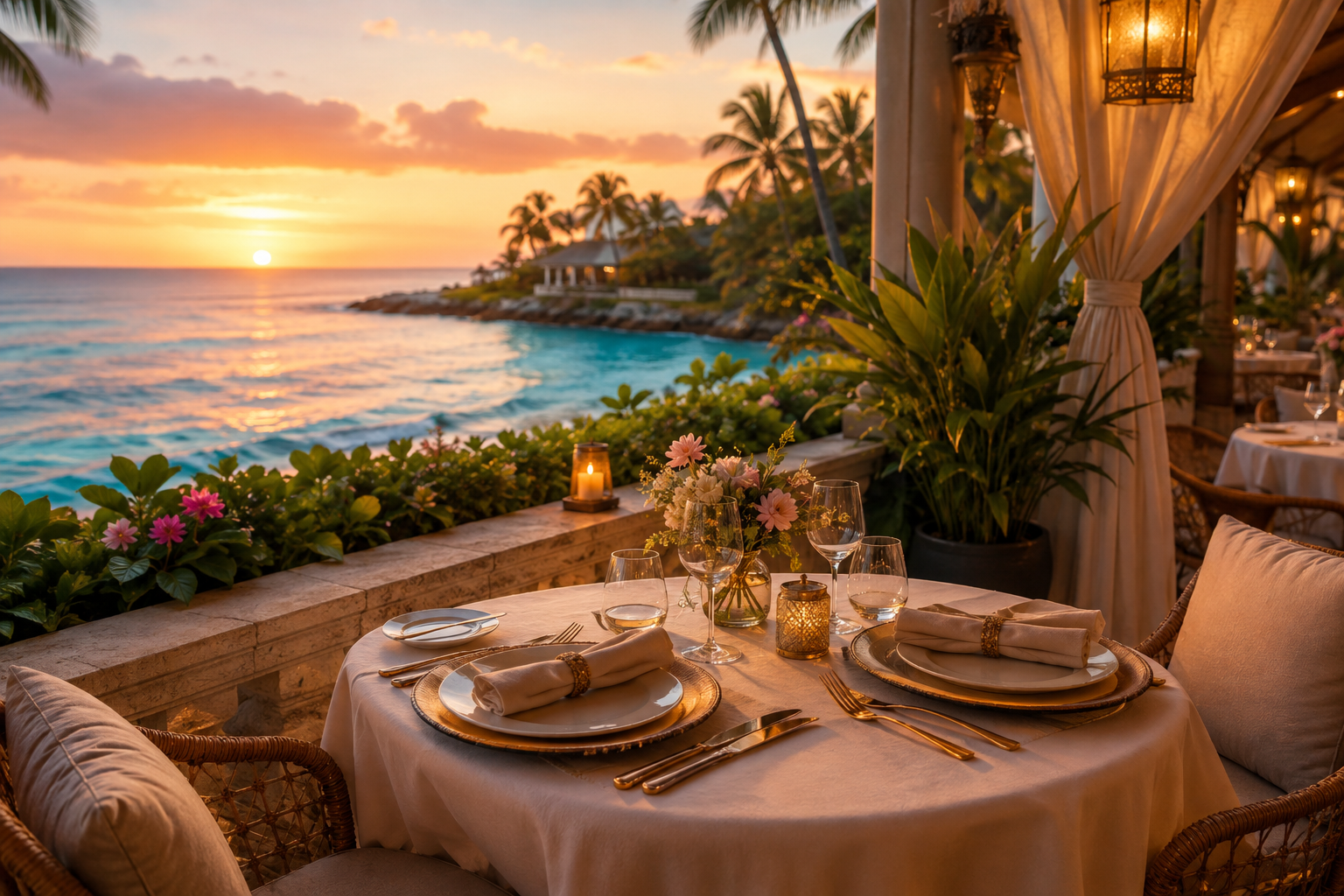
Pink Magnolia Travels Caribbean Resort Guide
Comparing Caribbean Resort Dining
Because the number of restaurants only tells part of the story.
A resort may advertise eight, ten, or even more places to eat—but the dining experience depends on much more than a restaurant count. Menus, reservations, specialty dining, dress codes, room service, casual options, beverages, dietary needs, and even restaurant hours can change the way your vacation actually feels.
Guide Topic 01
Why Resort Dining Matters More Than You Think
When you choose a Caribbean resort—especially an all-inclusive—you are not just choosing where you will sleep. You may also be choosing where you will have breakfast, lunch, dinner, snacks, coffee, cocktails, and some of the most romantic moments of the trip. That makes dining part of the overall resort experience, not simply an amenity listed on the website.
You May Eat at the Resort Three—or More—Times Every Day
A beautiful room matters. So does the beach. But when most of your meals happen on property, dining becomes one of the resort features you interact with again and again throughout the stay. Small frustrations can repeat just as easily as great experiences can.
Dining Touches More of the Vacation Than Dinner
Think about how many different moments in the day can be shaped by food, drinks, convenience, and atmosphere.
It Starts in the Morning
Coffee, breakfast hours, room service, grab-and-go options, and early excursion mornings can affect how easy the day feels before it really begins.
It Shapes Resort Days
Easy lunch near the pool or beach can keep a relaxed day flowing. Limited midday choices can mean getting dressed and crossing the property just to eat.
It Creates Evening Memories
A beautiful dinner, ocean view, favorite cocktail, live music, or candlelit table can become part of what makes the vacation feel romantic.
It Affects Your Schedule
Reservation requirements, limited dining times, restaurant closures, and waiting can add more structure to the vacation than you expected.
It Affects Value
If you chose an all-inclusive partly for convenience, knowing which dining experiences are included—and which cost extra—matters when comparing value.
It Reflects Your Travel Style
Some couples want elegant dinners every night. Others want casual beachfront meals, quick lunches, and as little planning around food as possible.
Great Dining Is About Fit, Not Perfection
The “best” dining setup depends on the way you actually like to vacation.
Ask Whether the Dining Experience Works for You
You do not need a resort with the most restaurants, the fanciest menus, or a formal dinner every evening. What matters is whether the dining setup supports the experience you want.
Think About an Entire Day of Dining
Dinner gets most of the attention when people compare resorts, but the rest of the day can matter just as much once you are actually there.
Morning
Coffee shop, buffet, à la carte breakfast, room service, or something quick before an excursion.
Midday
Pool grill, beach restaurant, buffet, food truck, snack bar, or a full sit-down lunch.
Evening
Casual dinner, specialty restaurant, romantic table, entertainment, or a relaxed meal after a long day.
Late Night
Room service, snacks, dessert, coffee, or somewhere to eat after entertainment ends.
The Same Dining Program Can Feel Very Different to Two Couples
What sounds like a strength to one traveler can feel inconvenient to another.
Couple A Loves Planning Dinner
They enjoy dressing up, trying different cuisines, making reservations, and turning dinner into part of the evening. A resort with several specialty restaurants may feel exciting rather than restrictive.
Couple B Wants Maximum Flexibility
They would rather decide after sunset whether they want steak, pizza, room service, or something casual. A dining setup that requires frequent advance reservations may feel less relaxing to them.
Before Comparing Restaurants, Ask Yourself...
These questions help clarify what “good resort dining” actually means to you.
Is Food a Big Part of Our Vacation Experience?
If memorable meals are something you look forward to while traveling, dining deserves more weight when comparing resorts.
Do We Like Variety—or Do We Have Favorites?
Some travelers want a different cuisine every night. Others are perfectly happy returning to the same favorite restaurant several times.
How Much Planning Around Meals Feels Comfortable?
Think about whether reservations and dress codes sound enjoyable, manageable, or like more structure than you want on vacation.
How Much Time Will We Actually Spend at the Resort?
The more meals you expect to eat on property, the more important dining variety, convenience, and everyday quality may become.
Travel Advisor Tip
I would never choose one resort over another simply because it lists more restaurants. I want to know whether those restaurants are actually different, how easy they are to use, which meals are available when, and whether the dining style fits the travelers. The goal is not the biggest number—it is the better overall experience.
Restaurant Count vs. Real Variety
Guide Topic 02
Restaurant Count vs. Real Variety
“This resort has ten restaurants” sounds impressive—but that number does not tell you how different those restaurants actually are, which meals they serve, whether they are open every day, or how many choices will realistically be available during your stay. The better question is not how many venues exist. It is how much useful variety those venues create.
Ten Dining Venues Does Not Always Mean Ten Dinner Choices
The advertised restaurant total may include a coffee shop, snack bar, pool grill, buffet, beachfront lunch venue, or restaurants that only open for certain meals. None of those are bad—but they should not all be interpreted as interchangeable dinner options.
Look Past the Number
Two resorts can advertise the same number of restaurants and still offer very different dining experiences.
Restaurant Count
How Many Venues Are Listed?
This tells you how many named dining outlets appear in the resort's marketing materials. It is useful—but it is only the first layer of the comparison.
Real Variety
How Many Different Experiences Do You Really Get?
This looks at cuisine, meal period, atmosphere, service style, menus, availability, location, and whether the venue adds a genuinely different option to your stay.
Count Experiences, Not Signs on Doors
A useful dining comparison asks what each venue contributes to the vacation.
What Makes One Restaurant Truly Different From Another?
The strongest dining programs usually give travelers several kinds of variety—not simply several names on a resort map.
What Might Be Included in the Restaurant Count?
Every resort describes its dining program differently, so look at the actual venue list instead of relying on the headline number.
Main Buffet
Often one of the most useful venues because it may serve multiple meals, but it still represents one dining style.
À La Carte Restaurants
These usually create the strongest sense of dinner variety when their cuisines and menus are truly different.
Café or Coffee Shop
Extremely useful for coffee, pastries, snacks, and quick bites—but not necessarily another full restaurant option.
Pool or Beach Grill
Great for a relaxed resort day, though it may operate primarily at lunch or during daytime hours.
Snack Bar or Quick Service
Convenient and valuable, especially between meals, but often not comparable to a full-service dinner restaurant.
Specialty Experience
A chef's table, romantic dinner, hibachi experience, or premium venue may count as dining even when reservations or extra charges apply.
Four Types of Variety Worth Comparing
A strong dining program usually gives you more than just a long restaurant list.
Cuisine Variety
If six restaurants all offer similar international menus, the number may feel larger on paper than it does by the fourth or fifth dinner.
Meal Variety
Look at what is available for breakfast, lunch, dinner, snacks, and late night—not only the evening restaurant lineup.
Atmosphere Variety
A casual beach lunch, elegant dinner, lively hibachi table, and quiet oceanfront restaurant can make meals feel different even within one stay.
Convenience Variety
Sometimes the most valuable choice is not another formal restaurant. It is having coffee early, lunch near the beach, or food available after a late excursion.
Two Resorts Can Both Say “8 Restaurants”
But those eight venues may create very different experiences.
Resort A
Eight Venues, Limited Dinner Variety
The total includes one buffet, two snack outlets, a coffee shop, two lunch-focused casual restaurants, and only two full-service dinner restaurants. The number is still eight—but the evening choice may feel much smaller.
Resort B
Eight Venues, Broader Overall Variety
The resort has a buffet, coffee shop, casual beach grill, and five distinct dinner restaurants with different cuisines and atmospheres. The same restaurant count creates a very different week.
Before You Get Impressed by the Number...
Ask these questions to find out how much dining variety is actually hiding behind it.
How Many Are Full Dinner Restaurants?
Separate dinner restaurants from cafés, grills, snack bars, and other useful—but different—venues.
Are the Cuisines Actually Different?
Look for meaningful menu differences rather than simply different restaurant names.
Which Venues Are Open for Which Meals?
A restaurant that only serves lunch does not add another dinner option, and vice versa.
Will We Actually Use These Options?
The best variety is the variety that matches your tastes, schedule, and the way you plan to spend the resort days.
Travel Advisor Tip
When I compare resorts, I like to break the dining program into breakfast, lunch, dinner, snacks, and specialty experiences instead of relying on one total number. That makes it much easier to see whether the resort actually offers enough variety for the length and style of the trip.
Buffet, À La Carte & Casual Dining
Guide Topic 03
Buffet, À La Carte & Casual Dining
A strong resort dining program usually is not built around one style of restaurant. Buffets, à la carte restaurants, beach grills, cafés, snack bars, and other casual options each serve a different purpose. The best mix is the one that gives you the right amount of convenience, variety, atmosphere, and flexibility throughout the day.
You Probably Don't Want Every Meal to Feel the Same
Some mornings you may want to grab breakfast quickly before an excursion. Another night you may want to dress up and linger over dinner. On a resort day, you may not want to leave the beach for more than twenty minutes. Different dining styles make those different vacation moments possible.
The Three Dining Styles You'll See Most Often
None is automatically better than another. Each solves a different dining need.
Flexible & Varied
Buffet Dining
Buffets can be one of the most practical parts of a resort dining program. They usually offer variety, quick service, flexible timing, and the ability for two travelers with different tastes to easily find something they want.
Often Best For
Breakfast, quick meals, mixed tastes, trying several foods, and days when you do not want dinner to become an event.
Sit-Down Experience
À La Carte Dining
À la carte restaurants usually offer table service and a more focused menu. These venues can create a stronger sense of occasion, particularly when the cuisine, atmosphere, and service feel distinct.
Often Best For
Romantic dinners, specialty cuisine, slower evenings, celebrations, and couples who enjoy making dinner part of the experience.
Easy & Relaxed
Casual Dining
Beach grills, pool restaurants, cafés, snack bars, pizzerias, food trucks, and quick-service venues keep meals from interrupting the part of the vacation you are already enjoying.
Often Best For
Resort days, lunches, snacks, quick bites, low-key evenings, and travelers who value spontaneity.
The Best Mix Creates Options
A resort does not need dozens of restaurants if the dining styles work well together.
Look for Different Ways to Eat, Not Just Different Menus
Variety is also about how much effort a meal requires. A resort can feel more flexible when it gives you choices between quick, casual, romantic, and full-service dining.
When Each Style Really Shines
The value of a restaurant often becomes clearer when you picture the moment you would actually use it.
Before an Excursion
A buffet, coffee shop, or grab-and-go option can be much more useful than a beautiful sit-down breakfast that takes too long.
During a Beach Day
A nearby grill or casual restaurant lets you eat without changing clothes, walking across the property, or losing your lounge chair rhythm.
For a Romantic Evening
An à la carte restaurant with beautiful atmosphere and slower service can turn dinner into one of the memorable experiences of the trip.
After a Long Adventure
The casual option may suddenly feel far more appealing than getting dressed for a formal dining room.
When You Want Choices
A well-run buffet can be ideal when one person wants seafood, the other wants pasta, and both want dessert.
For a Celebration
A specialty or elegant à la carte venue can give an anniversary, honeymoon, or birthday dinner a stronger sense of occasion.
Every Dining Style Has Tradeoffs
Understanding those tradeoffs helps you compare resorts based on your preferences rather than assumptions.
Buffet
Maximum Choice, Less Intimacy
Buffets can be convenient and varied, but they may feel busier or less special than a smaller table-service restaurant.
À La Carte
More Experience, More Structure
Table-service dining can feel elevated, but meals may take longer and reservations or dress requirements may apply.
Casual
Maximum Ease, Simpler Menus
Casual venues are great for convenience, though the menu may be smaller or designed more around quick favorites than variety.
One Resort Day Could Use All Three
This is why a thoughtful mix often matters more than simply having one dining style you love.
Breakfast
Buffet
Coffee, eggs, fruit, pastries, and whatever else sounds good without waiting for several courses before heading to the beach.
Lunch
Casual Beach Grill
Grab lunch near the water, stay in resort wear, and get back to the pool or beach without turning midday into a scheduled event.
Dinner
À La Carte
Shower, dress for dinner, choose a cuisine you are excited about, and let the evening feel a little more special.
What Mix Would Feel Best to You?
These questions can help you decide which dining styles deserve the most weight when comparing resorts.
Do We Enjoy Buffets?
If yes, a strong buffet can add significant everyday value. If not, you may want enough à la carte options that you rarely need it.
How Often Do We Want Dinner to Feel Special?
If romantic or elevated dinners matter, pay closer attention to the number and atmosphere of full-service restaurants.
How Important Is Convenience?
Beach grills, cafés, snacks, and quick-service options can make a major difference if you dislike planning your day around meals.
Do We Want Options Based on Our Mood?
A useful mix lets you decide whether tonight feels like a dress-up dinner, buffet, beach meal, or something quick.
Travel Advisor Tip
I like resorts that give travelers a useful mix of dining styles because the vacation does not feel the same every day. Some meals can be quick and easy, others can be romantic or memorable, and you still have options when you simply do not feel like getting dressed up. That flexibility often matters more than having one extra restaurant on the list.
Do Restaurants Require Reservations?
Guide Topic 04
Do Restaurants Require Reservations?
A resort can have a wonderful restaurant lineup, but the way you access those restaurants matters too. Some resorts encourage you to simply arrive when you're hungry. Others use advance reservations for certain venues or dining experiences. Understanding the system before you book can help you choose a resort that matches how spontaneous—or structured—you want your evenings to feel.
“Reservations Required” Is Only Half the Story
You also want to know when reservations can be made, how you make them, whether every restaurant requires one, how quickly popular times fill, and what happens when your first choice is unavailable. Those details determine how the system actually feels once you're at the resort.
Three Common Ways Resort Dining Can Work
Policies vary by resort and can change, but most dining systems generally fall somewhere along this spectrum.
Most Flexible
No Reservations
You choose where you want to eat and arrive during operating hours. Depending on demand, you may be seated immediately or asked to wait.
Good Fit If...
You prefer making decisions based on your mood instead of planning several dinners in advance.
More Structured
Reservations Required
Certain restaurants may require you to reserve a specific date and time, sometimes through an app, concierge, guest services, or another resort system.
Good Fit If...
You like knowing where dinner will be and prefer having a scheduled table instead of waiting.
A Mix of Both
Hybrid Dining
Many resorts use a combination: some restaurants are walk-in while certain specialty experiences, popular venues, or premium restaurants require reservations.
Good Fit If...
You enjoy some planned dinners but still want plenty of room for spontaneous evenings.
Think About How You Like to Vacation
The right reservation system is the one that supports your travel style.
Structure Can Feel Helpful—or Restrictive
Reservations themselves are not necessarily a positive or a negative. What matters is whether the system works with the way you want to spend your vacation.
Don't Stop at “Do I Need a Reservation?”
These details give you a much clearer picture of how easy—or complicated—the dining system may feel.
Booking Window
Find out when reservations become available. Some systems may allow planning earlier, while others open dining reservations closer to the meal or during the stay.
How You Book
Reservations may be handled through a resort app, concierge, guest services, telephone system, or another process.
Available Times
A restaurant may technically be available, but the remaining times may be much earlier or later than you prefer.
Popular Venues
Certain restaurants or experiences may be more sought-after than others, making availability especially important if one is high on your list.
Changes & Cancellations
Understand how easy it is to change plans if an excursion runs late, the weather shifts, or you simply decide you want something different.
Backup Options
A strong dining program should still give you appealing alternatives when your first-choice restaurant or preferred time is unavailable.
Which Sounds More Like Your Vacation?
There is no universally better answer. These two couples could love very different dining systems.
Couple A
“We'll Decide After the Beach.”
They do not want to know at breakfast where they will eat at 7:00 that evening. They want to see how they feel, whether they stay at the pool longer, and what sounds good in the moment. A flexible walk-in dining program may suit them beautifully.
Couple B
“Dinner at 7:30 Is Already Handled.”
They enjoy planning their evenings and like knowing they have a table at the restaurant they want. A well-organized reservation system may make the vacation feel easier rather than more structured.
Think Beyond the Reservation Itself
Your dinner time interacts with the rest of your vacation, so consider what happens before and after the meal too.
Excursions
Leave enough time for transportation delays, showers, and getting ready after returning to the resort.
Sunset
A dinner time can overlap with the sunset you wanted to watch from the beach or balcony.
Entertainment
Check whether your dinner timing works with shows, live music, or other evening activities you want to enjoy.
Relaxation
If you dislike watching the clock on vacation, too many fixed meal times may feel more restrictive than helpful.
Questions Worth Asking Before You Book
A few specific questions can tell you much more than simply asking whether reservations are required.
Which Restaurants Actually Require Reservations?
The policy may apply only to certain specialty restaurants rather than every dinner venue.
When Can Reservations Be Made?
Knowing the booking window helps you understand whether dining requires advance planning or can be handled more casually during the trip.
What Happens If My First Choice Is Full?
Look at the quality and variety of alternatives rather than judging the dining program solely by one popular restaurant.
How Much Flexibility Do We Want?
Your answer may matter more than whether the resort's reservation system looks impressive on paper.
Travel Advisor Tip
When dining is important to my clients, I want to understand more than whether reservations are required. I look at how the system works, which restaurants are affected, and whether it fits the couple's travel style. A structured system can be wonderful for travelers who like a plan, while another couple may be much happier somewhere they can simply decide where to eat when they're ready.
How Often Can You Visit Specialty Restaurants?
Guide Topic 05
How Often Can You Visit Specialty Restaurants?
Seeing several specialty restaurants on a resort map can make the dining program look incredibly varied—but another question matters just as much: how often can you actually use them? Depending on the resort, dining policies may affect how many specialty meals fit into your stay, which is especially important if those restaurants are a major reason you are comparing one property to another.
“Included” Does Not Always Mean Unlimited
A specialty restaurant may be part of the resort's dining program and still have reservation rules, visit limits, stay-length requirements, premium menu items, or other conditions. The details matter because the experience advertised is not always the same as the experience available every night of your stay.
Specialty Dining Policies Can Work in Different Ways
Resort policies vary, so the goal is not to assume one system applies everywhere. Instead, know what kinds of details to look for.
Most Flexible
No Stated Visit Limit
You may be able to choose among specialty restaurants throughout the stay based on availability, operating schedules, and any reservation requirements.
Still Check
Whether reservations, restaurant closures, or popular time slots affect how often you can realistically dine there.
Limited Visits
A Set Number of Specialty Meals
A resort package may include a certain number of specialty restaurant visits based on the room category, package, or length of stay.
Still Check
Whether the allowance is per person, per room, per stay, or tied to specific restaurant types.
Premium Experiences
Some Venues Work Differently
Certain chef experiences, romantic dinners, premium steakhouses, tasting menus, or special dining events may follow separate rules from the standard restaurant program.
Still Check
Whether these experiences carry an additional charge or require advance reservations.
Match the Policy to the Length of Your Stay
The same specialty dining policy can feel generous on a short trip and limiting on a longer one.
Ask How the Policy Feels Over the Entire Vacation
A dining allowance is easier to evaluate when you compare it with how many nights you are staying and how often you actually want a specialty dinner.
Trip Length Changes the Question
Instead of asking whether a policy sounds generous in general, compare it with the number of nights you are actually booking.
Shorter Stay
3–4 Nights
You may only have a few dinners at the resort anyway, so a limited number of specialty meals may still give you plenty of variety.
Typical Vacation
5–7 Nights
This is where restaurant variety and repeat-visit rules can become more noticeable, especially if dining is a major part of the resort experience for you.
Longer Escape
8+ Nights
Access, rotating menus, repeat visits, and off-property dining can all become more important when the vacation includes many more meals.
What Exactly Should You Verify?
This is where broad marketing language becomes useful planning information.
Is There a Visit Limit?
Determine whether specialty dining is generally available throughout the stay or whether a package includes a specific number of visits.
Is the Limit Per Restaurant—or Overall?
A policy limiting repeat visits to one venue is very different from a policy limiting all specialty dinners combined.
Does Room Category Matter?
Certain resort tiers, club levels, or room categories may offer different dining privileges or access.
Are Premium Venues Separate?
Some restaurants or dining experiences may not follow the same inclusion rules as the resort's standard specialty restaurants.
Why the Same Policy Can Feel Completely Different
The number only becomes meaningful once you compare it with how you plan to vacation.
Couple A
Three Specialty Dinners on a 5-Night Stay
They plan one dinner off property and are happy using the buffet or casual restaurant one evening. Three specialty meals may feel like exactly the right amount of variety for their trip.
Couple B
Three Specialty Dinners on a 10-Night Stay
They planned to eat almost every dinner at the resort and love trying different full-service restaurants. The same allowance may feel much more restrictive over a longer vacation.
Ask These Before You Compare the Restaurant List
A few specific questions can reveal whether the specialty dining program will actually work for your stay.
How Many Specialty Dinners Do We Actually Want?
If you only expect two or three special dinners, a limit may never affect you.
Will We Eat Off Property?
Local restaurants and excursions that include meals can reduce the number of resort dinners you need to plan.
Are We Happy Repeating Favorites?
If you enjoy returning to the same restaurant, repeat-visit policies may matter more than the total number of venues.
Is Dining One of Our Main Resort Priorities?
The more important food is to your vacation, the more closely specialty access deserves to be compared.
Travel Advisor Tip
I would compare specialty dining access with the actual length of the stay instead of looking at the policy by itself. Three specialty dinners could be plenty for one couple and nowhere near enough for another. The real question is whether the dining program gives you enough variety for the way you plan to spend your vacation.
What Counts as Specialty Dining?
Guide Topic 06
What Counts as Specialty Dining?
“Specialty dining” sounds straightforward, but resorts do not always use the term in exactly the same way. It may describe a restaurant focused on a particular cuisine, a more elevated dining experience, interactive cooking, a premium menu, or something designed to feel different from the resort's everyday dining options. Knowing what the term actually means at the resort you are considering makes comparison much easier.
Specialty Does Not Automatically Mean Extra Cost
At some all-inclusive resorts, specialty restaurants are part of the standard dining program. At others, certain restaurants, menu items, wines, or dining experiences may carry an additional charge. Instead of assuming based on the word “specialty,” look at exactly what is included in your particular resort package.
What Might Be Called a Specialty Restaurant?
These are some of the restaurant styles you may see separated from the resort's main buffet or casual dining program.
Focused Cuisine
Steakhouse
A steakhouse may offer a more traditional sit-down dinner with steaks, seafood, sides, desserts, and a more polished evening atmosphere.
Look For
Whether all cuts are included or certain premium selections carry a supplement.
Interactive Dining
Sushi & Teppanyaki
Japanese restaurants may include sushi, à la carte dishes, or interactive teppanyaki-style dining where the preparation itself becomes part of the evening.
Look For
Whether interactive seating requires a reservation even when other parts of the restaurant do not.
Regional Cuisine
Italian, French & International
Resorts often use specialty venues to create distinct cuisine experiences, giving you something different from the broader menu found at the main restaurant.
Look For
Whether these restaurants rotate operating nights or require particular dress standards.
Premium Ingredients
Seafood & Lobster
Seafood-focused restaurants can range from casual beachfront dining to elegant evening venues featuring locally inspired dishes.
Look For
Whether premium seafood selections are part of the standard menu or available at an additional cost.
Destination Flavor
Caribbean Cuisine
A Caribbean-focused restaurant can give you an opportunity to enjoy regional ingredients, spices, seafood, and dishes inspired by the destination without leaving the resort.
Look For
How strongly the menu reflects the destination rather than simply offering another general restaurant.
Elevated Experience
Chef's Table & Tasting Menus
Multi-course menus, chef-led experiences, wine pairings, or limited seating events may sit at the premium end of a resort's dining program.
Look For
These experiences are especially important to verify individually because they may follow separate pricing and reservation rules.
Restaurant, Menu Item, or Experience?
Sometimes the restaurant is included while a particular choice inside it is not.
Look One Level Deeper Than the Restaurant Name
A restaurant can be part of an all-inclusive dining program while still offering optional upgrades. This distinction can prevent surprises once you arrive.
Sometimes Specialty Dining Is About the Experience
The food may only be part of what makes a dining option different from the resort's everyday restaurants.
Interactive Cooking
Teppanyaki, live cooking, or chef interaction can turn dinner into entertainment rather than simply a meal.
Romantic Dining
A private table on the beach, candlelight setup, or secluded location can transform a standard dinner into a special occasion.
Wine Pairings
Curated wines paired with multiple courses may be offered as a separate dining experience or upgrade.
Location-Based Dining
Dinner on a pier, beach, rooftop, or private terrace may be priced differently because the setting is part of the experience.
Chef-Led Menus
Limited-seat dinners and tasting menus may offer courses designed specifically for that evening.
Celebration Dinners
Honeymoon, anniversary, proposal, or birthday packages may combine dining with décor, flowers, dessert, or other special touches.
Included Restaurant vs. Included Experience
This small distinction can make a big difference when you are comparing all-inclusive resorts.
Example One
The Restaurant Is Included
You dine at the steakhouse as part of your resort package and choose from the standard included menu. A premium steak, upgraded bottle of wine, or special tasting option may still be available for an additional charge.
Example Two
The Experience Is Separate
Dinner at the resort's restaurants may be included, but a private candlelight dinner on the beach may be treated as an optional experience because of the private setting, setup, service, or menu.
Four Details Worth Looking At Closely
These details help turn “specialty dining available” into information you can actually use.
What's Included on the Menu?
Look for premium entrées, upgraded ingredients, wine lists, or other selections that may be priced separately.
Does It Require a Reservation?
Specialty restaurants may have different reservation rules from the resort's casual or main dining venues.
Is There a Visit Limit?
Even when a restaurant is included, your package or length of stay may affect how often you can dine there.
Is It a Restaurant or an Upgrade?
Private dining, chef's tables, premium menus, and romantic setups may be separate experiences rather than standard restaurant access.
What Matters Most to You?
Specialty dining becomes much easier to compare once you know which experiences you would actually use.
Do We Want Variety or Fine Dining?
Several distinct casual restaurants may be more valuable to you than one very elaborate premium experience—or the opposite may be true.
Would We Pay Extra for a Special Meal?
If a romantic dinner or chef's experience would be a highlight of the trip, an optional dining upgrade may still provide meaningful value.
Are We Celebrating Something?
Honeymoons, anniversaries, birthdays, and proposals can make specialty dining experiences more important than they would be on another trip.
Is Food a Major Part of Our Vacation?
If dining is one of the experiences you look forward to most, understanding these distinctions deserves more weight in your resort decision.
Travel Advisor Tip
When I compare resort dining, I don't assume that “specialty” means either included or extra. I look at the actual dining terms for the resort and room category being considered. That helps separate the restaurants you can enjoy as part of the package from optional experiences you may want to budget for separately.
Which Dining Experiences May Cost Extra?
Guide Topic 07
Included—or an Extra Charge?
One of the biggest reasons travelers choose an all-inclusive resort is the convenience of knowing many vacation costs are bundled together. But “all-inclusive” does not necessarily mean every restaurant, menu item, bottle of wine, private dinner, or premium experience is included. Knowing where optional costs may appear helps you compare resorts more accurately—and budget for the experiences you actually want.
Extra Cost Does Not Automatically Mean Bad Value
Some optional dining experiences are designed to be upgrades rather than part of the everyday resort package. The key is knowing what is included before arrival so you can decide whether an upgrade is worth it to you instead of discovering the price only after you are already on vacation.
Think in Two Layers
A resort may include a very complete dining program while still offering optional premium experiences.
Standard Inclusion
What's Part of the Resort Package?
This may include the main buffet, casual restaurants, selected à la carte venues, snacks, standard beverages, and other dining options described in your package. The exact inclusions should be verified for the resort and booking category you are considering.
Optional Upgrade
What Can You Choose to Add?
Premium entrées, upgraded wines, private dinners, chef experiences, romantic setups, or certain specialty restaurants may sometimes be offered separately. These extras can be wonderful—but they should not be confused with the standard included program.
Read the Details, Not Just the Headline
“All-inclusive dining” can still contain optional choices.
Look at Exactly Where the Upgrade Begins
Sometimes an entire experience is optional. Other times, only one part of an otherwise included meal carries an additional charge.
Dining Extras You May Want to Ask About
These are examples of areas where optional charges may appear. Policies vary by resort, so verify the details rather than assuming.
Premium Entrées
Specialty cuts of meat, lobster, premium seafood, or other upgraded dishes may sometimes sit outside the standard included menu.
Premium Wine
House wine or selected beverages may be included while higher-end bottles, vintages, or special pairings are offered separately.
Private Romantic Dinners
A private table on the beach, pier, garden, or terrace may carry an additional charge because of the setting, service, décor, or dedicated setup.
Chef's Tables
Limited-seat tasting menus, chef-led dinners, or multi-course experiences may be treated differently from standard restaurant dining.
Premium Beverages
Certain liquor brands, champagne, specialty cocktails, or upgraded beverage packages may have separate inclusion rules.
Celebration Packages
Anniversary, honeymoon, proposal, or birthday dining packages may include flowers, décor, cake, photography, or other additions beyond the meal itself.
Extra Charges Can Hide in Different Places
This is why comparing only whether a restaurant is “included” can still leave part of the story unanswered.
On the Menu
A restaurant may be included while a few premium selections are marked separately. Look at the standard menu and any optional supplements.
In the Beverage List
Standard wine, liquor, or cocktails may be included while premium bottles and specialty selections follow different pricing.
In the Setting
You may be paying for privacy, décor, dedicated service, or a special location rather than simply paying for the meal itself.
In the Experience
Interactive cooking, wine pairings, multi-course tasting menus, and chef-led events can be priced separately even when regular dining is included.
The Better Value Depends on What You'll Actually Use
A resort with optional upgrades is not automatically less inclusive for the things that matter to you.
Couple A
Standard Dining Is Plenty
They are happy with the included restaurants, standard drinks, and casual evenings. They have no interest in a private beach dinner or expensive bottle of wine. Optional upgrades may have almost no impact on the value of the resort for them.
Couple B
Dining Is Part of the Celebration
They want a romantic private dinner, premium wine, and a special anniversary experience. Knowing those costs in advance allows them to compare the complete vacation budget instead of only the base resort price.
Think About the Total Dining Experience
Before deciding whether an extra cost matters, think about whether it supports something you genuinely want from the trip.
Everyday Meals
Are the included restaurants already enough for most of the vacation?
Beverage Preferences
Are standard drinks enough, or are premium wines and spirits important to you?
Special Moments
Would one private or celebration dinner add meaningful value to the trip?
Total Budget
Can optional experiences be planned into the vacation budget instead of becoming surprises?
Questions Worth Asking Before You Book
These questions help separate true inclusions from optional experiences.
Are All Restaurants Included?
Find out whether any dining venues operate outside the standard package or follow different rules.
Are Some Menu Items Extra?
A restaurant may be included while premium entrées, seafood, steak, or wine are available with a supplement.
What Beverages Are Included?
Look beyond “drinks included” and determine whether the standard beverage program fits your preferences.
Which Special Experiences Would We Actually Buy?
Optional extras only matter to your comparison if they are experiences you would realistically choose.
Travel Advisor Tip
When I compare all-inclusive resorts, I like to separate the standard dining program from the optional experiences. That gives you a much clearer picture of what the vacation price already covers and what you might choose to add. An optional upgrade is not necessarily a problem— the important part is knowing about it before you make your decision.
Understanding Resort Menus
Guide Topic 09
Resort Dining Dress Codes
Caribbean resort dining can range from barefoot-casual lunches near the beach to elegant evening restaurants where guests are expected to dress a little more formally. Understanding the resort's dress codes before you pack helps you avoid arriving at a restaurant only to discover that your beachwear, sandals, or shorts do not meet the evening requirements.
“Resort Casual” Can Mean Different Things
One resort may consider polished shorts and a nice shirt perfectly acceptable for dinner, while another restaurant may require long pants, closed-toe shoes, or a collared shirt. The safest approach is to check the resort's actual dining guidelines rather than relying on the dress-code label alone.
Three Dress Levels You May Encounter
The wording varies by resort, but dining expectations often fall somewhere along these lines.
Most Relaxed
Beach or Casual Dining
Common around pools, beaches, grills, and daytime restaurants. Resort wear, cover-ups, shorts, casual tops, and sandals may be perfectly appropriate.
Keep in Mind
Even casual venues may require shirts, footwear, or a cover-up rather than wet swimwear.
Polished but Easy
Resort Casual
Think vacation-ready but put together: sundresses, skirts, linen, polos, tailored shorts where permitted, nice tops, sandals, or other polished warm-weather clothing.
Keep in Mind
The resort's definition is what matters, especially for men's shorts and footwear.
Dressier Evening
Resort Elegant
Some specialty restaurants ask guests to elevate the evening with dresses, jumpsuits, dressier separates, collared shirts, long pants, or more polished footwear.
Keep in Mind
This usually means polished vacation attire—not black tie—but exact requirements should still be verified.
Pack for the Restaurant You Want to Enjoy
One polished evening outfit can open up more dining choices than you may realize.
A Little Planning Prevents an Awkward Dinner Surprise
You do not need an entire suitcase of formal clothing. For many resort trips, a few versatile pieces can cover casual lunches, romantic dinners, and specialty restaurants without overpacking.
A Simple Resort Dinner Packing Strategy
You can cover most dining situations without packing an entirely separate wardrobe.
Casual Pieces
Comfortable resort wear for breakfast, lunch, cafés, pool grills, and relaxed evenings.
One or Two Dressier Looks
Pack versatile outfits that work for specialty restaurants, romantic dinners, and celebration evenings.
Appropriate Shoes
Bring at least one pair of shoes that works if a restaurant does not permit beach sandals, flip-flops, or overly casual footwear.
The Small Details Are Usually What Trip People Up
Dress codes often become confusing because they address specific clothing rather than simply saying “dress nicely.”
Shorts
Some dinner restaurants allow tailored shorts while others may request long pants, particularly for men. This is worth checking before you pack.
Footwear
Flip-flops, beach slides, dress sandals, and closed-toe shoes may all be treated differently depending on the restaurant.
Swimwear
Pool and beach venues may be relaxed, but restaurants often ask guests to wear a cover-up, shirt, or dry clothing rather than dining in wet swimwear.
Sleeveless Shirts & Hats
Certain evening restaurants may have guidelines regarding tank tops, sleeveless shirts, baseball caps, or other very casual pieces.
Dress Codes Can Affect the Feel of Your Vacation
Neither style is better. The question is which one sounds more relaxing to you.
Couple A
“We Love Dressing Up for Dinner.”
They enjoy showering after the beach, putting on a nice outfit, having a cocktail before dinner, and making the evening feel like part of the vacation experience. More polished restaurants may be a real plus for them.
Couple B
“We Want Dinner to Stay Easy.”
They would rather stay casual after a beach day and do not want to plan outfits around dinner. A resort with relaxed evening dining may fit their vacation style much better.
Before You Close the Suitcase
A quick check can help make sure you are ready for the restaurants you actually want to experience.
Questions Worth Checking Before Travel
Dress-code terminology alone may not answer these, so look for the actual resort policy.
Are Long Pants Required Anywhere?
This is especially useful to know before packing for men who otherwise planned to bring only shorts.
What Footwear Is Allowed?
Check whether dress sandals, casual sandals, flip-flops, or closed-toe shoes are expected at evening venues.
Do All Restaurants Follow the Same Code?
Specialty restaurants may have stricter requirements than buffets, beach grills, or casual dining spaces.
Does This Match How We Want to Vacation?
If dressing for dinner sounds fun, great. If it sounds like a chore, that is useful information when comparing resorts.
Travel Advisor Tip
I like to check the dress requirements for the restaurants my clients are most likely to enjoy before they travel. It is a small detail, but it can prevent frustration once you're there—especially when a favorite specialty restaurant has different rules from the rest of the resort. A little packing preparation gives you more freedom once vacation begins.
Breakfast Matters Too
Guide Topic 10
Breakfast Matters Too
Dinner may get most of the attention when travelers compare resort dining, but breakfast can have just as much impact on how the vacation feels day to day. Whether you want a leisurely sit-down meal, strong coffee before sunrise, room service on the balcony, or something quick before an excursion, the right breakfast options can make mornings feel much easier.
Your Perfect Breakfast Depends on the Kind of Morning You're Having
A relaxed resort morning may call for coffee and an ocean-view breakfast that lasts an hour. An excursion day may require something completely different. The most useful resorts give you enough options that breakfast can fit the day instead of forcing the day to fit breakfast.
Four Breakfast Options Worth Comparing
You may not need all four, but having more than one style can make the resort feel much more flexible.
Buffet Breakfast
A buffet can be ideal when you want plenty of choices, different foods for each traveler, and the freedom to eat quickly or linger.
À La Carte Breakfast
Sit-down breakfast can feel quieter and more relaxed, especially when you want table service and a slower start to the morning.
Café or Grab-and-Go
Coffee, pastries, fruit, sandwiches, and quick bites can be extremely useful when you do not have time—or appetite—for a full meal.
Room Service
Breakfast in the room can be perfect for a slow morning, private balcony coffee, or simply avoiding the restaurant before you're fully awake.
Think About Morning Convenience
The best breakfast setup is the one that works on both your lazy days and your adventure days.
Breakfast Can Set the Pace for the Entire Day
A resort with flexible breakfast choices makes it easier to enjoy different kinds of mornings without unnecessary rushing.
Early Excursion Mornings Deserve Special Attention
Breakfast hours matter most on the days when you cannot simply wait for the main restaurant to open.
Opening Time
Check whether the main breakfast restaurant opens early enough for the excursions you are considering.
Early Coffee
If coffee before sunrise is non-negotiable, find out whether a café, lobby station, or room setup is available early.
Quick Food
A pastry, fruit, sandwich, or small grab-and-go option can be more useful than a large breakfast buffet that opens too late.
Transportation Timing
Remember that pickup times may be earlier than the official excursion start time.
The Same Breakfast Program Can Feel Very Different
Your normal morning habits can tell you which details deserve more weight.
Couple A
“Coffee First. Food Later.”
They are not interested in sitting down for a full breakfast every morning. A good coffee shop, quick pastries, and easy grab-and-go options may matter more to them than an elaborate breakfast buffet.
Couple B
“Breakfast Is Part of the Vacation.”
They love a full breakfast, tropical fruit, made-to-order eggs, fresh juice, and time to sit together before the day begins. A strong buffet or à la carte breakfast may be much more important to them.
Small Breakfast Details Can Make a Big Difference
These are easy to overlook when you are focused on dinner restaurants.
Coffee Quality & Availability
If coffee matters to you, look at whether there is a dedicated café, in-room coffee, specialty drinks, or only standard restaurant coffee.
Made-to-Order Stations
Omelets, eggs, pancakes, waffles, smoothies, or other freshly prepared options can make a buffet feel much more varied.
Room Service Hours
If breakfast in bed sounds appealing, check whether morning room service is available and whether delivery fees or menu limitations apply.
Location
A breakfast restaurant close to your room, beach, or excursion pickup area can make mornings feel much easier.
Questions Worth Asking Before You Book
Think about your real morning habits instead of the breakfast you imagine having every day.
What Time Does Breakfast Start?
This becomes especially important if you expect early tours, airport transfers, or activity pickups.
Can We Get Coffee Before the Restaurants Open?
Early coffee access may be a tiny detail on paper and a very big detail at 6:00 in the morning.
Are There Quick Options?
A café, pastry counter, fruit station, or grab-and-go setup can be invaluable on busy mornings.
Would We Actually Use Room Service?
If balcony breakfast sounds like your idea of vacation, room-service details deserve a closer look.
Travel Advisor Tip
Breakfast is one of those resort details that may not feel important until the first early excursion morning. I like to look at what time food and coffee are available, whether there are quick options, and how much flexibility couples have. The goal is to make mornings easier, not add another schedule to the vacation.
Lunch Can Make or Break a Resort Day
Guide Topic 11
Lunch Can Make or Break a Resort Day
Lunch may not be the meal you think about first when comparing Caribbean resorts, but it can have a surprisingly big impact on your vacation. When you're settled into a beach chair, relaxing beside the pool, or returning from a morning adventure, the last thing you may want to do is change clothes and cross the resort just to find something to eat.
Great Lunch Options Should Fit Into Your Day
At dinner, getting ready and heading to a restaurant can be part of the experience. Lunch is different. On many resort days, convenience matters just as much as the menu. The easier it is to grab something good without interrupting your day, the more relaxed the resort can feel.
Four Lunch Styles Worth Comparing
The best setup depends on whether you want a full meal, something quick, or food that barely interrupts your beach chair.
Beachside Dining
A restaurant near the beach can make it easy to enjoy seafood, salads, sandwiches, tacos, or a full lunch without wandering far from the water.
Pool Grill
Burgers, wraps, grilled foods, fries, pizza, and quick favorites can be perfect when you want lunch without turning it into an event.
Buffet or Restaurant
A traditional lunch venue may offer more variety and a comfortable break from the sun when you want a fuller midday meal.
Food Truck or Casual Stand
Small casual outlets can add personality and convenience with tacos, jerk chicken, sandwiches, pizza, local bites, or other quick foods.
Can You Eat Without Changing Clothes?
On a Caribbean resort day, this little detail can matter more than you think.
Pay Attention to Swimwear Rules
A lunch restaurant may be close to the pool or beach but still have rules about swimwear, wet clothing, shirts, footwear, or cover-ups. Knowing those expectations ahead of time helps you understand how convenient the restaurant really is.
Convenience Is Part of the Dining Experience
A fantastic lunch menu is less useful if enjoying it requires a major interruption to your day.
Location
Look at where lunch venues are located compared with the beach, pools, rooms, and activity areas you expect to use most.
Hours
A narrow lunch window can be inconvenient if you tend to eat late or return from excursions after traditional lunch hours.
Dress Requirements
Casual attire rules can determine whether lunch is truly grab-and-go or requires a trip back to the room first.
Speed
Table service may be wonderful when you want to linger, but a faster option can be valuable when you're eager to get back outside.
Variety
Look for a mix of light meals, filling options, familiar favorites, and foods that suit both travelers.
Indoor Options
A comfortable indoor lunch venue can be especially welcome when you want air conditioning, shade, or somewhere to escape a tropical shower.
Picture Your Actual Resort Day
The right lunch setup depends heavily on how you expect to spend your daytime hours.
Relaxation Day
“We're Not Leaving the Beach.”
You found the perfect chairs, the turquoise water is beautiful, and neither of you wants to give up your spot. A nearby beach grill, casual lunch restaurant, or quick food option may be far more valuable than an elaborate restaurant across the property.
Adventure Day
“We Just Got Back and We're Starving.”
After snorkeling, hiking, sailing, or exploring the island, you may return outside normal lunch hours. Extended dining hours, cafés, snack bars, or grab-and-go food can suddenly become some of the most useful options at the resort.
Small Lunch Details Worth Checking
These may look minor on a resort website, but they can have a noticeable impact once you're actually there.
How Late Is Lunch Available?
If the main lunch service ends early, check whether another venue serves food through the afternoon.
Is There a Beach or Pool Option?
Convenient daytime food can make a big difference if most of your resort time will be spent near the water.
Is Lunch Mostly Buffet or À La Carte?
Some travelers love the speed and variety of a buffet. Others prefer sitting down and ordering from a menu. Know which experience you prefer.
What Happens Between Lunch and Dinner?
If you miss lunch or get hungry at 4:00 p.m., knowing where you can find food becomes surprisingly important.
Questions to Ask When Comparing Resorts
Think less about what lunch looks like in a brochure and more about how you want your actual afternoons to feel.
Can We Eat Near the Beach or Pool?
If relaxing by the water is a major part of your vacation, nearby food may be one of the most valuable daytime conveniences.
Do We Need to Change for Lunch?
Check whether cover-ups, shirts, shoes, or dry clothing are required before entering daytime restaurants.
Can We Find Food Outside Normal Lunch Hours?
This matters for late risers, excursion days, spa appointments, and those afternoons when you simply lose track of time.
Are There Both Light and Filling Choices?
Some days you may want a salad or fruit. Other days you may return from an adventure ready for a burger, pizza, or full meal.
Travel Advisor Tip
When I'm comparing resorts for couples who want both adventure and relaxation, I pay attention to what happens in the middle of the day. Convenient lunch options can make beach and pool days feel effortless, while flexible hours can be especially useful after excursions. It is one of those details that helps the resort work around your vacation instead of making you work around the resort.
Don't Forget the In-Between Moments
Guide Topic 12
Room Service & In-Room Dining
Room service can sound like a small resort perk until the moment you actually want it. Maybe you're enjoying coffee on the balcony, returning late from an excursion, relaxing after a long beach day, or simply don't feel like getting dressed for another restaurant. Knowing how in-room dining works can add another layer of flexibility to your stay.
“Room Service Available” Doesn't Tell You Enough
You also want to know when it is available, what is on the menu, whether delivery carries a fee, how long orders typically take, and whether the service is included for every room category. Those details determine whether room service is a true dining option or simply an occasional convenience.
Room Service Can Look Very Different From Resort to Resort
Before assuming what in-room dining includes, look at the actual service offered at the property you are considering.
Breakfast Service
Breakfast delivered to the room can be perfect for slow mornings, early coffee, or enjoying the balcony before the resort day begins.
Full Meal Service
Some resorts offer enough entrées, sides, desserts, and drinks that in-room dining can replace a restaurant meal when you want a quiet evening.
Limited Menu
Other resorts may focus on simpler selections such as sandwiches, burgers, pizza, salads, snacks, or a small number of entrées.
Late-Night Dining
Evening or overnight room service can be especially useful after entertainment, a late flight, or an excursion that returns after restaurants close.
Sometimes the Room Is Exactly Where You Want to Be
Not every memorable meal needs a restaurant reservation.
In-Room Dining Can Add Real Flexibility
Room service becomes especially valuable when it gives you another option instead of forcing every meal into the resort's restaurant schedule.
When Room Service Can Be Especially Useful
You may not use it every day, but there are moments when having the option can feel incredibly convenient.
Arrival Night
Flight delays, immigration, transfers, and check-in can push your arrival later than expected. In-room food can save you from hunting for an open restaurant.
After an Excursion
After snorkeling, sailing, hiking, or exploring all day, staying in the room for dinner may sound far better than getting ready again.
Balcony Evening
If your room has a beautiful view, ordering dinner or dessert can turn the balcony into your own private dining space.
Rainy Afternoon
Tropical weather can change quickly. Room service can make an unexpected indoor afternoon feel cozy instead of inconvenient.
Lazy Morning
Breakfast in bed or coffee on the balcony can be exactly the kind of unhurried morning you wanted from the vacation.
Late-Night Hunger
After a show, drinks, dancing, or a late evening, an in-room menu can be much more appealing than discovering every food venue has already closed.
Six Details Worth Checking
The phrase “room service included” can still leave several practical questions unanswered.
What Are the Hours?
Determine whether service is available around the clock, during specific meal periods, or only during limited daytime and evening hours.
Is There a Delivery Fee?
Food may be included while a service or delivery charge applies. Other resorts may include standard delivery entirely.
How Large Is the Menu?
Some menus offer complete meals while others are designed mainly for snacks and simple comfort foods.
Does Room Category Matter?
Certain club, concierge, suite, or premium room categories may have different room-service benefits from standard accommodations.
Are Beverages Included?
Check whether coffee, juice, soft drinks, wine, cocktails, or other beverages can be ordered with in-room meals and whether the same beverage inclusions apply.
How Do You Order?
Ordering may happen through a phone call, television, app, QR code, concierge service, or another resort system.
How Much Does Room Service Matter to You?
For some couples it is barely used. For others, it becomes part of what makes the resort feel special.
Couple A
“We'll Probably Never Use It.”
They love being out around the resort and expect to eat nearly every meal at restaurants. Limited room service would probably have very little impact on whether the resort is a good fit.
Couple B
“Coffee on the Balcony Is Part of the Plan.”
They picture slow mornings, breakfast in the room, and maybe one quiet dinner after an excursion. A strong in-room dining program adds real value to the way they want to vacation.
Questions to Ask Before You Count Room Service as a Perk
A few quick details will tell you whether the service is likely to be useful during your stay.
Is Room Service Available 24 Hours?
If not, find out when service begins and ends so you know whether it covers breakfast, late-night food, or only selected meal periods.
Is It Truly Included?
Look for delivery charges, service fees, menu supplements, or differences based on room category.
Would We Use It for a Full Meal?
If yes, menu variety matters more than it would if you only want coffee, breakfast, or a late-night snack.
Is Our Room Worth Dining In?
A balcony, ocean view, private terrace, or spacious suite can make in-room dining feel like an experience rather than simply convenience.
Travel Advisor Tip
I look at room service as another layer of flexibility rather than something every traveler has to prioritize. If you love balcony breakfasts, expect late excursion days, or simply enjoy having the option to stay in one evening, the hours, menu, and fees deserve a closer look. If you know you'll be out enjoying the restaurants every night, it may matter much less.
Coffee, Snacks & Late-Night Food
Guide Topic 13
Coffee, Snacks & Late-Night Food
Vacation hunger does not always happen neatly at breakfast, lunch, and dinner. Sometimes you want coffee before sunrise, something sweet after dinner, a snack between beach time and getting ready for the evening, or food after a late show. These smaller dining options can make a resort feel much more convenient than the main restaurant list suggests.
The Hours Between Meals Matter Too
A resort may have excellent dinner restaurants and still feel inconvenient if there is nowhere to grab coffee early, food in the afternoon, or a late-night bite. The best dining programs usually provide at least a few easy options outside traditional meal periods.
Look at the Hours, Not Just the Venue
A café is only useful when it is open at the time you actually want it.
Availability Can Matter More Than Variety
The question is not only whether snacks or coffee exist. It is whether they are available during the gaps in the normal restaurant schedule.
When These Options Become Surprisingly Important
The small dining venues often matter most when your vacation day does not follow the restaurant schedule.
Before Sunrise
Early excursion or airport-transfer mornings can make a coffee shop or grab-and-go station more useful than an elaborate breakfast buffet.
Mid-Beach Day
You may want fruit, chips, ice cream, or something small without leaving the pool or beach long enough for a full meal.
After an Excursion
Returning after lunch service ends can make an afternoon snack venue feel like one of the most valuable dining options at the resort.
After-Dinner Treat
Sometimes you do not want another full dessert course—you just want coffee, ice cream, or something sweet while walking around the resort.
After Entertainment
A show or live music may end well after the restaurants do. Late food keeps the evening from ending with a hunt for something to eat.
Late Arrival
Flight delays or long transfers can put you at the resort after dinner hours, when even a simple sandwich or pizza can feel perfect.
Details Worth Checking
These small questions help you understand how flexible the resort really is between meals.
How Early Does Coffee Start?
If you're an early riser, check whether coffee is available before the main breakfast restaurant opens.
Is Afternoon Food Available?
Look for food options that bridge the gap between the end of lunch service and the beginning of dinner.
How Late Can You Eat?
Some resorts offer late-night restaurants, while others rely on room service or a smaller snack menu.
Are Drinks Available Too?
Coffee shops and snack venues may offer specialty drinks, smoothies, juices, soft drinks, or other beverages in addition to food.
Small Details. Very Different Experience.
Two resorts can have similar restaurants and still feel completely different between meal times.
Resort A
Great Meals, Limited In-Between Options
Breakfast, lunch, and dinner are excellent, but most food venues close between meal periods. Travelers who miss lunch or get hungry late may have fewer choices.
Resort B
Something Available Most of the Day
A café opens early, a casual venue covers the afternoon, desserts are available in the evening, and late-night food fills the final gap. The main restaurants may be similar, but the day feels more flexible.
Questions to Ask Before You Book
Think about the hours when you are most likely to want something outside a traditional meal.
Can We Get Coffee Early?
For coffee lovers, access before breakfast may matter more than how many coffee drinks appear on the menu.
Is Food Available Between Lunch and Dinner?
Afternoon options can be especially useful after excursions, spa appointments, or long beach days.
What Can We Eat Late at Night?
Look at whether a restaurant, snack bar, café, or room-service menu is available after the evening entertainment.
Are the Quick Options Things We'd Actually Eat?
A venue only adds flexibility if the food and drinks available there appeal to you.
Travel Advisor Tip
I like to look at the gaps between the main dining periods because that's often where convenience shows up. A good coffee shop, afternoon snack option, and late-night food can make a resort feel much easier, especially for couples mixing relaxed resort days with excursions and evening entertainment.
Dietary Needs & Food Allergies
Guide Topic 14
Dietary Needs & Food Allergies
If either of you has a food allergy, intolerance, dietary restriction, or specific way of eating, resort dining deserves a closer look. Variety is important—but so are communication, preparation practices, menu flexibility, and knowing what the resort can realistically accommodate before you arrive.
“Options Available” and “Safely Accommodated” Are Not the Same Thing
A menu may contain foods that appear to fit your needs, but that does not automatically tell you how ingredients are handled or whether cross-contact can occur. For preferences, variety may be the main concern. For medically necessary restrictions or serious allergies, communication and food-handling procedures become much more important.
Start With What You Actually Need
Different dietary situations require different levels of planning, so be specific when comparing resorts.
Vegetarian & Vegan
Look beyond one token entrée. Consider whether there are satisfying choices across breakfast, lunch, dinner, snacks, and specialty restaurants.
Gluten-Free
Ask about menu identification, preparation practices, separate cooking areas when applicable, and how the resort handles cross-contact.
Intolerances
Dairy, ingredient, and other intolerances may require substitutions or modifications, so find out how flexible individual restaurants can be.
Food Allergies
Serious allergies require more than finding an ingredient-free dish. Ask specifically about communication and cross-contact procedures.
Communication Matters
The best-looking menu means very little if your needs cannot be clearly communicated.
Find Out How the Resort Handles Special Requests
Resorts may have different processes for communicating dietary needs. Understanding that process before travel can make dining easier once you arrive.
Before You Travel
A little preparation can make dining conversations much easier once you are at the resort.
Be Specific
Clearly distinguish between a preference, intolerance, and allergy so the resort understands the level of care required.
Ask About Procedures
Instead of asking only whether the resort “has gluten-free food” or “handles allergies,” ask how special dietary needs are communicated and managed.
Review Restaurant Variety
Consider whether several restaurants appear able to provide suitable choices rather than relying on one venue for the entire vacation.
Consider Language
When traveling internationally, carrying a written allergy or dietary card in the destination's primary language can help support clear communication.
Pack Backup Snacks
Travelers with significant restrictions may feel more comfortable carrying familiar travel-safe snacks for flights, transfers, or moments when suitable food is not immediately available.
Reconfirm On Property
Even when needs were communicated before travel, reconfirm them with the appropriate resort staff after arrival and again when dining.
Buffet vs. À La Carte Dining
Both can offer good options, but they may present different considerations depending on your dietary needs.
Buffet Dining
More Variety, More Questions
Buffets can provide plenty of choice, but shared serving utensils, preparation areas, sauces, garnishes, and unlabeled ingredients may create questions for travelers with serious allergies or strict dietary requirements. Ask a knowledgeable staff member rather than making assumptions based only on what you see.
À La Carte Dining
More Direct Communication
Ordering individually may make it easier to discuss ingredients and possible modifications with restaurant staff. However, never assume à la carte preparation eliminates cross-contact or guarantees that every request can be accommodated.
Questions Worth Asking
If dietary needs could affect your enjoyment or safety, these questions belong in the resort comparison—not after you have already booked.
How Does the Resort Handle Food Allergies?
Ask about the actual process for communicating allergies to restaurant and kitchen staff rather than relying on a general statement that allergies are accommodated.
Are Menus Clearly Marked?
Dietary symbols can make menus easier to navigate, but ask what the symbols mean and whether additional ingredient information is available.
Can Dishes Be Modified?
Some kitchens may be able to adjust sauces, sides, proteins, or other components, while others work from more standardized menus.
Who Should We Speak With?
Find out whether dietary concerns should be discussed with the server, restaurant manager, chef, concierge, or another designated resort contact.
An Important Note About Food Allergies
If you have a severe or potentially life-threatening food allergy, do not rely solely on resort marketing, menu symbols, online reviews, or third-party descriptions. Confirm current procedures directly with the resort and follow the medical guidance and emergency plan provided by your healthcare professional. Resort menus, staffing, ingredients, and preparation practices can change.
Travel Advisor Tip
If dietary needs are important to your trip, tell me early in the planning process. It gives us the opportunity to make them part of the resort comparison instead of treating them as an afterthought. I can help identify the questions we need to ask and review the information available from the resort—but for serious food allergies, current procedures should always be confirmed directly with the property.
Drinks, Bars & Beverage Quality
Guide Topic 15
Drinks, Bars & Beverage Quality
When you're comparing all-inclusive resorts, beverages are part of the dining experience too. The difference between resorts can show up in the cocktails they make, the brands they pour, the wines they serve, the coffee available in the morning, the non-alcoholic options throughout the day, and how convenient it is to get a drink wherever you're spending your time.
“Unlimited Drinks” Doesn't Tell You What You'll Actually Be Drinking
A resort may include drinks throughout your stay, but the actual beverage program can vary. Look at cocktail quality, liquor brands, wine selections, beer choices, coffee, bottled or filtered water, non-alcoholic options, and any premium upgrades before assuming two all-inclusive resorts offer the same experience.
Look Beyond the Poolside Cocktail
Even if you enjoy a tropical drink by the pool, the full beverage program may matter throughout the entire day.
Cocktails
Look at whether bars offer only a short list of frozen favorites or a broader cocktail menu with classics, tropical drinks, and specialty creations.
Wine & Champagne
House wine may be included while premium bottles or upgraded selections are available separately, depending on the resort.
Coffee & Specialty Drinks
Espresso, cappuccino, iced coffee, tea, and dedicated cafés can matter just as much as cocktails for travelers who love their morning routine.
Non-Alcoholic Options
Mocktails, smoothies, fresh juices, sodas, flavored waters, and other alcohol-free choices can make the beverage program feel much more complete.
Premium Doesn't Mean the Same Thing Everywhere
Brand names, upgraded bottles, and top-shelf selections can follow different rules at different resorts.
Find Out What's Included Before You Compare Value
If beverage quality is important to you, look at what the standard package actually covers rather than assuming every brand on the bar shelf is automatically included.
Included Beverage Program vs. Premium Upgrades
Neither structure is automatically better. What matters is whether the included choices already match your preferences.
Standard Inclusion
Everything You'd Normally Order Is Included
If you're happy with the included cocktails, house wine, beer, coffee, soft drinks, and standard liquor brands, a premium beverage upgrade may add little value to your trip.
Premium Preference
Brand and Quality Matter to You
If you prefer particular liquor brands, better wine, champagne, specialty coffee, or more elaborate cocktails, those details deserve more attention during the resort comparison.
Details Worth Checking Before You Book
A few practical details can tell you much more than a brochure photo of a tropical cocktail.
Which Brands Are Included?
If brand matters to you, look at the actual included beverage list instead of relying on broad terms such as premium or top shelf.
What Wine Is Served at Dinner?
Check whether the standard restaurant wine selection fits your tastes and whether upgraded bottles are available if you want something different.
Are Specialty Coffees Included?
Espresso drinks, iced coffee, and café beverages may be part of the package or may follow separate rules depending on the resort.
Are Mocktails Easy to Order?
A thoughtful non-alcoholic program can be important for travelers who do not drink or simply want something different throughout the day.
What Time Do Bars Close?
Bar hours can affect late evenings, especially when live music, shows, lounges, or nightlife continue after dinner.
Is Water Easy to Access?
Bottled, filtered, or refillable water access matters throughout the day, especially in a warm Caribbean climate.
Beverage Quality Only Matters If It Matters to You
Two couples can look at the same bar program and value it completely differently.
Couple A
“Give Us a Frozen Drink by the Pool.”
They are not particular about brands and mostly want cold tropical drinks, water, soda, and maybe a glass of wine at dinner. A solid standard beverage program may be more than enough.
Couple B
“We Notice What's Behind the Bar.”
They enjoy craft cocktails, particular liquor brands, good wine, espresso drinks, and a pre-dinner cocktail ritual. Beverage quality may deserve far more weight in their resort choice.
Questions to Ask While Comparing Resorts
Think about what you actually drink at home and on vacation rather than what sounds impressive in a package description.
Are the Brands We Prefer Included?
If the answer matters to you, verify actual brands rather than relying on labels like premium.
Are There Good Non-Alcoholic Choices?
Mocktails, smoothies, coffee, tea, juices, and other choices can make the beverage program feel more complete for both drinkers and non-drinkers.
Are Bars Located Where We'll Spend Our Time?
Beach, pool, lobby, entertainment, and restaurant locations all affect convenience.
Would We Actually Pay for Premium Upgrades?
If the included program already covers what you normally order, premium options may have little effect on your overall value.
Travel Advisor Tip
I like to ask couples what they actually enjoy drinking before giving too much weight to a resort's beverage program. If you're happy with a frozen drink and house wine, you may not care about premium liquor lists. If cocktails, wine, coffee, or specific brands are part of the experience for you, then those details become much more important when comparing one resort with another.
Romantic Dining & Special Experiences
Guide Topic 16
Romantic Dining & Special Experiences
Some resort meals are simply about eating well. Others become part of the memory of the trip itself. A private beach dinner, sunset table, candlelit terrace, chef-led tasting menu, or anniversary celebration can turn an ordinary evening into something that feels completely different from the rest of the vacation.
You're Not Always Paying for the Food
With romantic dining experiences, part of the value may come from the setting, privacy, dedicated service, décor, flowers, sunset timing, or simply having a quiet space reserved for the two of you. When comparing the price, look at the entire experience rather than only the menu.
Romantic Dining Can Take Many Forms
Resorts may offer anything from a special table within an existing restaurant to a completely private dining experience.
Classic Caribbean
Private Beach Dinner
A table set directly on or near the beach can combine dinner with candlelight, ocean views, and a more private atmosphere.
Check
Whether the setup is truly private, semi-private, or one of several tables arranged in the same area.
View-Focused
Sunset Dining
A terrace, pier, rooftop, or waterfront table timed around sunset can make the setting just as important as the meal itself.
Check
Whether sunset timing requires a specific reservation time and how weather changes are handled.
Culinary Experience
Chef's Table
Multi-course dinners, tasting menus, chef interaction, or wine pairings can make food itself the centerpiece of the evening.
Check
Whether the experience is private, shared with other guests, and offered only on selected nights.
Intimate Setting
Candlelight Dinner
Some resorts create a romantic setup in a garden, gazebo, terrace, or other secluded location away from the main restaurant.
Check
What décor, service, menu, and beverages are actually included in the package.
Celebration
Anniversary Dinner
Anniversary packages may combine dining with champagne, flowers, dessert, décor, or another celebratory touch.
Check
Whether proof of the occasion, advance booking, or a minimum-stay requirement applies.
Milestone Moment
Proposal or Honeymoon Experience
Resorts may help arrange special meals for proposals, honeymoons, vow renewals, or other major relationship milestones.
Check
How customizable the experience is and which services are included versus priced separately.
Make It Meaningful, Not Just Expensive
The best special experience is the one that actually feels like the two of you.
Decide What Would Make the Evening Feel Special
Before paying for a package, think about which part of the experience matters most. You may discover that a simple sunset table fits you better than a highly elaborate setup.
Special Dining Can Fit More Than a Honeymoon
You do not need a once-in-a-lifetime occasion to create one memorable evening.
Honeymoon
Build one intentionally romantic evening into the trip rather than expecting every dinner to feel like an event.
Anniversary
A private dinner can create a natural moment to slow down and celebrate the reason behind the trip.
Proposal
A carefully planned dining setting can help create the right atmosphere for a major milestone.
Just Because
Sometimes the reason is simply that you're together somewhere beautiful—and that's enough.
What Might Be Part of the Package?
Romantic dining packages vary widely, so compare exactly what is included rather than looking only at the total price.
Special Menu
The experience may feature a set multi-course menu rather than selections from the resort's regular restaurants.
Wine or Champagne
Some packages include a bottle or selected beverage, while premium upgrades may be available separately.
Flowers & Décor
Floral arrangements, candles, lanterns, petals, or other décor may be part of the setup.
Celebration Dessert
Cake, chocolate, dessert plates, or another personalized touch may be included for special occasions.
Photography
Photography may be offered as part of a package or separately, particularly for proposals and major celebrations.
Dedicated Service
A private server or more personalized service may be one of the features separating the experience from a normal dinner.
Romantic Doesn't Have to Mean the Same Thing for Every Couple
The best experience depends on what makes the two of you feel relaxed, connected, and completely on vacation.
Couple A
“Give Us the Full Experience.”
They want a private table on the sand, candlelight, champagne, flowers, multiple courses, and plenty of time to enjoy the evening. A dedicated romantic dining package could be one of the highlights of their trip.
Couple B
“Just Give Us a Great Table at Sunset.”
They do not need decorations or a private server. They would rather enjoy a beautiful restaurant, an ocean view, and a really good meal together. The simpler option may feel far more romantic to them.
Details Worth Confirming Before You Reserve
Special dining experiences often require more planning than an ordinary dinner reservation.
How Far Ahead Should It Be Booked?
Private dining locations and sunset times may have limited availability, especially during popular travel periods.
What Happens if It Rains?
Outdoor experiences should have a clear weather policy, alternate location, rescheduling process, or cancellation terms.
Can the Menu Be Customized?
Ask whether menu choices, dietary needs, beverages, desserts, or other elements can be adjusted.
Is the Price Per Couple or Per Person?
Make sure you understand how the experience is priced and whether taxes, service charges, or extras apply.
Is the Location Truly Private?
A secluded table and a designated romantic dining area with several couples can create very different experiences.
What Exactly Is Included?
Confirm the meal, beverages, décor, flowers, dessert, photography, gratuities, and any other advertised features.
Ask Yourselves These Questions First
A memorable experience starts with knowing what would actually feel special to the two of you.
Are We Celebrating Something?
A honeymoon, anniversary, birthday, proposal, or other milestone may make one special dinner worth prioritizing.
Do We Want Privacy or Atmosphere?
A private beach dinner and a lively waterfront restaurant can both be romantic—they simply create different moods.
How Important Is the Menu?
If you're food-focused, compare the actual menu carefully. If the setting matters more, weigh the location and experience more heavily.
Is This Where We'd Rather Spend the Extra Money?
Compare the experience with other possible upgrades such as a spa treatment, excursion, room category, or another special activity.
Travel Advisor Tip
I would never recommend adding a romantic dinner simply because a resort offers one. I would first look at what would actually make the evening special for you. Sometimes that's a private beach setup with all the extras. Sometimes it's reserving a beautiful restaurant at the right time for sunset. The goal is to create a memory that feels like your relationship—not somebody else's idea of romance.
Dining Atmosphere & Service
Guide Topic 17
How Dining Atmosphere Changes the Vacation
Dining atmosphere can shape the entire rhythm of a resort stay. A quiet oceanfront restaurant can make an evening feel romantic and unhurried, while a lively terrace with music can turn dinner into the beginning of the night's entertainment. The food matters—but so does the way the setting makes you feel.
Atmosphere Is Part of the Resort Experience
A resort with several different dining moods can make each evening feel fresh. You might enjoy a barefoot lunch by the beach one day, a lively dinner with music the next, and a quiet adults-only restaurant for a romantic evening later in the trip.
Seven Dining Atmospheres to Look For
The best resort for you may be the one that offers the mix of dining moods you actually want during the trip.
Romantic
Candlelight, ocean views, quieter seating, soft music, and a slower pace can make dinner feel like part of a couples getaway rather than simply another meal.
Lively
Music, conversation, open kitchens, busy terraces, and an energetic crowd can make dinner feel social and fun.
Casual
Easy resort attire, relaxed service, simple menus, and an informal setting can be perfect after a long beach or excursion day.
Quiet
A quieter restaurant can be ideal when you want conversation, privacy, and an evening that feels slower than the rest of the resort.
Beachfront
Sand, sea breeze, turquoise water, and sunset views can make even a simple meal feel unmistakably Caribbean.
Adults-Only Spaces
Resorts or restaurant areas reserved for adults may provide a quieter, more couples-focused setting depending on the property.
Dinner With Entertainment
Live music, cultural performances, themed nights, cooking displays, or other entertainment can turn dinner into part of the evening's activity.
Variety in Mood Matters Too
Different restaurants can give different nights their own personality.
Imagine How You Want Your Evenings to Feel
Instead of asking whether a resort has enough restaurants, think about whether it offers enough different experiences.
Match the Atmosphere to Your Travel Style
The restaurant another traveler loves may not be the one that makes your vacation feel right.
Couple A
“We Want Dinner to Feel Romantic.”
They may care more about ocean views, quieter spaces, outdoor terraces, sunset timing, and adults-focused restaurants than having a large number of lively dining venues.
Couple B
“We Want Energy After the Sun Goes Down.”
Live music, themed dinners, busy bars, entertainment, and lively restaurants may make the evenings feel much more exciting to them.
Couple C
“We Want Everything Easy.”
They may prefer casual restaurants, flexible dress codes, beachfront dining, quick lunches, and dinners that do not require a major production.
Couple D
“We'd Like a Little of Everything.”
A resort with casual daytime dining, a lively evening restaurant, beachfront options, and one or two quieter romantic venues may offer the balance they want.
When Dinner and Entertainment Blend Together
For some couples, entertainment during or after dinner adds energy to the night. For others, it can make dinner feel busier than they prefer.
Live Music
Acoustic music, bands, piano, or local musicians can add atmosphere without necessarily turning dinner into a full show.
Cultural Performances
Caribbean music, dance, or themed evenings can make dinner feel more connected to the destination.
Interactive Dining
Cooking stations, tableside preparation, teppanyaki, chef interaction, or other presentations can make the meal itself part of the entertainment.
Small Atmosphere Details Worth Noticing
These details can change whether a restaurant feels romantic, relaxing, social, or simply too busy.
Table Spacing
More space between tables can create privacy, while tighter seating may create a more social and energetic atmosphere.
Lighting
Candlelight and soft evening lighting create a very different mood from brightly lit casual restaurants.
Indoor vs. Outdoor
Open-air dining can feel beautifully Caribbean, while air-conditioned restaurants can be especially comfortable after a warm day.
Restaurant Location
Beachfront, garden, rooftop, poolside, lobby, and central resort locations all create different experiences.
Adults-Only Areas
Some properties may offer adults-only restaurants or designated spaces even when the resort itself welcomes families.
Service Pace
A slower meal can feel romantic when you want to linger and frustrating when you're trying to make an evening show. Context matters.
Questions to Ask When Comparing Dining Atmosphere
Think about how you want your evenings to feel, not simply where you want to eat.
Are There Quiet Restaurants for Couples?
If romantic conversation matters to you, make sure at least some of the resort's dining spaces fit that mood.
Are There Lively Options Too?
If you enjoy energy and entertainment, look for restaurants near music, bars, shows, or active evening spaces.
Can We Dine by the Water?
Beachfront and waterfront dining can be a meaningful part of the Caribbean experience for couples who value scenery.
Is There Enough Variety in Mood?
A good mix lets you choose casual, romantic, quiet, or lively depending on how you feel that night.
Travel Advisor Tip
I like to compare the mood of the restaurants just as much as the menus. For couples who want both adventure and relaxation, having different dining atmospheres can help the vacation feel balanced. One night can be casual after an active day, another can be lively and fun, and another can be quiet and romantic. That variety can matter just as much as the number of restaurants.
How Much Dining Variety Do You Actually Need?
Guide Topic 18
How Much Dining Variety Do You Actually Need?
More restaurants can sound impressive, but more isn't automatically better. The amount of dining variety you actually need depends on how long you're staying, how often you plan to leave the resort, how adventurous you are with food, and whether you enjoy returning to a favorite restaurant more than once.
Match the Dining Program to the Length of Your Stay
A resort with five restaurants may feel wonderfully varied during a four-night getaway and somewhat repetitive during a ten-night stay. The restaurant number only makes sense when you compare it with how many meals you'll actually be eating on property.
Think About Variety by Number of Nights
There is no perfect restaurant count, but your length of stay gives you a useful place to start.
Short Getaway
4-Night Stay
You may only have four dinners at the resort—and possibly fewer if your arrival night is late or you spend one evening off property. A smaller but well-chosen restaurant lineup may be completely sufficient.
Focus On
A few genuinely different restaurants you would be excited to try, plus convenient breakfast and lunch options.
Classic Escape
5-Night Stay
Five nights gives you more time to experience the dining program, but you still may not need a huge resort. Several distinct dinner options can create plenty of variety.
Focus On
Enough distinct dinner choices that you don't feel forced to repeat unless you actually want to.
Full Vacation
7-Night Stay
A full week makes restaurant variety more important. You'll probably want several different cuisines, atmospheres, and meal styles so the dining experience continues to feel fresh.
Focus On
Distinct cuisines, different dining moods, strong casual options, and enough flexibility to mix things up throughout the week.
Longer Stay
8 Nights or More
Longer vacations make variety, operating schedules, menu overlap, and off-property dining more important. Repetition becomes easier to notice when you're staying well beyond a week.
Focus On
A broad dining program, rotating options, cafés and snacks, plus opportunities to explore local restaurants if that fits your trip.
Count Dining Experiences, Not Restaurant Signs
Eight restaurant names don't necessarily equal eight different experiences.
Look for Meaningful Variety
The goal isn't to eat somewhere with a different name every night. It's to have enough genuinely different choices that meals continue to feel enjoyable throughout your stay.
Restaurant Count Is Only One Part of Variety
These details can make a smaller restaurant lineup feel much more varied.
Distinct Cuisines
Five restaurants serving clearly different cuisines may offer more meaningful variety than eight restaurants with similar menus.
Different Atmospheres
Beachfront, casual, elegant, quiet, lively, and outdoor dining can make meals feel different even when some foods overlap.
Rotating Menus
Specials, theme nights, or changing menu selections may add variety without adding another restaurant.
Cafés & Snacks
Coffee shops, snack bars, dessert counters, and quick bites expand your choices outside the main meal periods.
Room Service
In-room dining creates another meal option, especially for breakfast, late arrivals, or evenings when you want to stay in.
Off-Property Dining
If you plan to explore local restaurants, you may need less variety inside the resort itself.
Picture Two Very Different Vacations
Length of stay matters—but so does how you plan to spend those days.
5-Night Resort-Focused Trip
Most Meals Stay on Property
7-Night Adventure-Focused Trip
Some Meals Happen Away From the Resort
Bigger Isn't Automatically Better
Restaurant quantity only matters when the additional choices improve your actual vacation.
Resort A
Twelve Restaurants
The number looks impressive, but several cuisines do not interest you, some restaurants have similar menus, and two require extra charges you do not plan to pay. You may realistically use only six or seven of the twelve.
Resort B
Seven Restaurants
Every restaurant appeals to you, the cuisines are different, there are both romantic and casual options, and all seven fit comfortably within your stay. The smaller dining program may actually offer more usable variety.
When More Dining Variety Deserves Extra Weight
Some trips naturally benefit from a larger dining program.
Longer Stays
The longer you remain at one resort, the more likely menu repetition and limited restaurant schedules are to become noticeable.
Food-Focused Travelers
If trying different restaurants is one of the things you most look forward to on vacation, dining variety deserves more weight.
Mostly Resort-Based Trips
If nearly every meal will happen on property, the resort's dining program becomes a much larger part of the overall experience.
Different Tastes
Couples who enjoy very different foods often benefit from a broader range of cuisines and restaurants.
Dietary Preferences
Having several restaurants with suitable options can provide much more flexibility than relying on one or two venues.
Different Evening Moods
Romantic, casual, lively, beachfront, and quiet restaurants can make a longer trip feel much more varied from night to night.
Ask These Questions Before You Chase a Bigger Restaurant Number
These questions will tell you more than the restaurant count on the resort website.
How Many Nights Will We Actually Be There?
Compare the number of usable dinner options with the number of dinners you'll realistically have at the resort.
How Many Restaurants Would We Actually Choose?
Ignore cuisines you would never order and focus on the restaurants that genuinely appeal to both of you.
Are We Comfortable Repeating a Favorite?
Some couples love returning to the same great restaurant twice. Others want every dinner to feel completely different.
Will We Eat Off Property?
Exploring local restaurants can reduce how much resort dining variety you actually need.
Are the Restaurants Open When We Need Them?
Rotating schedules can reduce the number of restaurants available on any particular night.
Does the Variety Match Our Travel Style?
Your ideal dining program should support the vacation you're planning—not simply look impressive on a comparison chart.
Travel Advisor Tip
When I compare resort dining, I look at the number of nights you're staying before I ever worry about which property has more restaurants. For a shorter getaway, a smaller collection of excellent restaurants may be perfect. For a longer stay, broader cuisine, atmosphere, snack, breakfast, and late-night options can become much more important. The right amount of variety is the amount that fits your trip.
Your Resort Dining Checklist
Final Guide Section
Your Resort Dining Checklist
You've looked at nearly every part of the Caribbean resort dining experience. Now it's time to bring everything together. Use this checklist when you're comparing resorts so you can focus on the details that will actually affect your vacation—not just the number of restaurants listed on a resort website.
You Don't Need Every Box Checked
This isn't a list of requirements every resort needs to meet. Use it to identify the things that matter most to the two of you. A resort can be an excellent fit without offering everything—as long as it offers the things that will make your vacation feel right.
Save This Checklist for Your Resort Search
Check the boxes directly on this page as you compare resorts, or print a clean copy to keep with your vacation planning notes.
Pink Magnolia Travels
Caribbean Resort Dining Checklist
Use this checklist to compare the dining experience—not just the restaurant count.
Restaurant Variety
Reservations & Availability
What's Included
Breakfast & Lunch
Snacks, Cafés & Room Service
Dress Codes
Dietary Needs
Drinks & Bars
Dining Atmosphere
Romantic & Special Experiences
Our Final Resort Dining Notes
Before making the final decision, write down what stands out most. This helps you compare the experience instead of getting distracted by one impressive feature.
Remember: You're Looking for the Right Fit, Not the Longest Feature List
One resort may have twelve restaurants while another has seven. That doesn't automatically make the first resort better. Look at how many nights you're staying, which restaurants you would actually use, how reservations work, what is included, whether the menus appeal to you, and how the entire dining experience fits the kind of vacation the two of you want.
Ready When You Are
You Don't Have to Compare All of This by Yourself
Choosing the right Caribbean resort isn't about finding the property with the most impressive list of amenities. It's about finding the resort that fits the way you want to spend your vacation—from your mornings and adventures to your beach time, dinners, and evenings together.
Tell me what matters to the two of you, and I'll help narrow the options to resorts that make sense for your travel style, priorities, and budget.
Personalized Caribbean vacation planning with Pink Magnolia Travels.